Les Futûhât al-Makkiyya

Volume du manuscrit 2 · Page 291

Manuscrit de Konya

Ouvrir la source arabeOuvrir la traduction anglaise

Arabe

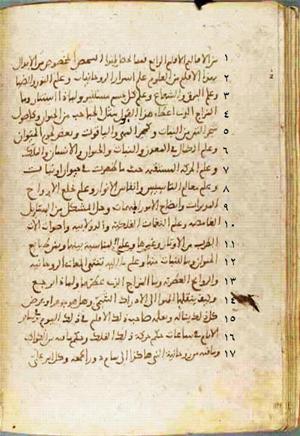
إذ لو تقدَّمَ له مِثْلٌ لما صحَّتْ له الأوَّليَّة؛ فذِكْرُه مناسبٌ لمقامه.

(البدل الثَّاني)

ومقام الشخص الثَّاني في هجيره (قول الله تعالى في سورة الكهف [109]): ﴿‏‏ ‏‏ ‏‏ ‏‏ ‏‏ ‏‏ ‏‏﴾ [الكهف: ١٠٩]، وهو مقام العلم الإلهٰي وتعلُّقُه لا ينتهي، وهو الثَّاني من الأوصاف؛ فإن أوَّل الأوصاف الحياةُ ويليه العِلمُ.

(البدل الثَّالث)

وهِجِّير الشَّخص الثَّالث ومقامه (قول الله تعالى في سورة الذَّاريات): ﴿‏‏ ‏‏ ‏‏ ‏‏ ‏‏ ‏‏﴾ [الذاريات: ٢١]، وهي المرتبة الثَّالثة، فإن الآيات الأُوَل هي الأسماء الإلهٰيَّة، والآيات الثَّواني في الآفاق، والآيات الَّتي تلي الثَّواني في أنفسنا، قال تعالى (في سورة فصِّلت): ﴿‏‏ ‏‏ ‏‏ ‏‏ ‏‏ ‏‏ ...‏‏﴾ [فصلت: ٥٣]، فلهٰذا اختصَّ بهٰذا الهجير الثَّالث من الأبدال.

(البدل الرَّابع)

ومقام الرَّابع في هجيره: ﴿‏‏ ‏‏ ‏‏ ‏‏﴾ [النبأ: ٤٠]، (كما ورد في سورة النَّبأ)، وهو الرُّكن الرَّابع من الأركان الَّذي يطلب المركَزَ عند من يقول به،[121] فليس لنقطة الأُكْرَةِ شيء أقرب من الأرضِ، وتلك النُّقطة كانت سبب وجود المحيط، فهو يطلب القرب من الله موجِدِ الأشياءِ، ولا يحصل (هٰذا القرب) إلاَّ بالتَّواضع، ولا أنْزَلَ في التَّواضع من الأرض، وهي منابع العلوم وتفجُّرِ الأنهار، وكلُّ ما ينْزِل من المُعْصِراتِ فإنما هو من بخارات الرطوبات التي تصعد من الأرض، فمنها تنفجر العيون والأنهار؛ ومنها تخرج البخارات إلى الجوّ فتستحيل ماءٌ، فتنزل غيثاً، فلهٰذا اختَصَّ الرَّابع بالرَّابع من الأركان.

(البدل الخامس)

ومقام الخامس (قول الله تعالى في سورة الأنبياء [7]، وكذٰلك النَّحل [43]): ﴿‏‏ ‏‏

Notes

[121]

المركز

Anglais

for if a counterpart had preceded him, firstness could not belong to him. His remembrance therefore corresponds to his station.

(The Second Substitute)

The second person’s station is expressed in his constant litany, God Most High’s saying in Surat al-Kahf [109]: “[Quotation absent from the supplied text]” [al-Kahf 18:109]. This is the station of divine knowledge, whose relations have no end. It is the second of the attributes, for the first attribute is life, followed by knowledge.

(The Third Substitute)

The third person’s constant litany and station are God Most High’s saying in Surat al-Dhariyat: “[Quotation absent from the supplied text]” [al-Dhariyat 51:21]. This is the third rank: the first signs are the divine Names, the second signs are in the horizons, and the signs following the second are within ourselves. God Most High says in Surat Fussilat: “[Quotation absent from the supplied text]” [Fussilat 41:53]. For this reason the third Substitute is distinguished by this constant litany.

(The Fourth Substitute)

The fourth one’s station is expressed in his constant litany: “[Quotation absent from the supplied text]” [al-Nabaʾ 78:40], as found in Surat al-Nabaʾ. This is the fourth element, which seeks the center according to those who hold that view.[121] Nothing is closer to the sphere’s central point than earth, and that point was the cause of the circumference’s existence. He therefore seeks nearness to God, who brings things into existence. This nearness is attained only through humility, and nothing is lower in humility than earth. It is the source of sciences and the bursting forth of rivers. Everything descending from rain-bearing clouds comes from the vapors of moisture that ascend from earth. Springs and rivers burst forth from it; from it vapors rise into the atmosphere, turn into water, and descend as rain. For this reason the fourth Substitute is distinguished by the fourth element.

(The Fifth Substitute)

The fifth one’s station is God Most High’s saying in Surat al-Anbiyaʾ [7], and likewise al-Nahl [43]:—

Notes

[121]

The center.

Image du manuscritVolume du manuscrit 2 · Page 291

Les textes arabe et anglais sont reliés par le même identifiant de page de Konya. La répartition est approximative ; vérifiez le manuscrit.

Référence de la source du Caire

Ibn al-Arabi, The Meccan Revelations — Volume du manuscrit 2 · Page 291 — https://www.futmak.com/francais/konya/pages.php?id=611&text=both