
Futmak · الفتوحات المكية · Meccan Revelations

Les Futûhât al-Makkiyya

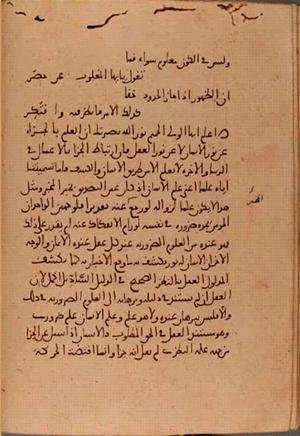
Volume du manuscrit 19 · Page 117

Manuscrit de Konya

Ouvrir la source arabeOuvrir la traduction anglaise

Arabe

وليس في الكون معلوم سواه فما

تقول يا أيها المغلوب عن حصر

إن الظهور إذا جاز الحدود خفا

كذٰلك الأمر فانظر فيه وافتكر

(نور الإيمان والعلم بالجزاء)

اعلم أيها الولي الحميم، نور الله بصيرتك أن العلم بالجزاء (يكون) عن نور الإيمان، لا عن نور العقل فإن ارتباط الجزاء بالأعمال، في الدنيا والآخرة لا يعلم إلا من طريق الإيمان والكشف.

فأما تسميتنا إياه علما، أعني علم الإيمان، إذ كان عين التصديق بخبر المخبر، ومثل هٰذا لا يكون علما، لزواله لو رجع المخبر عنه، تقديرا.

فلوجهين، الواحد أن المؤمن يجده ضرورة في نفسه، لو رام الانفكاك عنه، لم يقدر على ذٰلك، فهو عنده من العلوم الضرورية، عند كل عقل عنده الإيمان.

والوجه الآخر أن الإيمان له نور يكشف به ما وقع الإخبار به، كما يكشف المدلول العقل بالنظر الصحيح في الدليل الشاذ[20] بل أكمل؛ لأن العقل إن لم يستند في دليله وبرهانه إلى العلوم الضرورية في ذٰلك، وإلا فليس ببرهان عنده، ولا هو علم وعلم الإيمان علم ضروري، وهو مستند العقل في الحق المطلوب.

فالإنسان إذا سئل عن الجزاء من جهة علمه النظري، لم يقل إنه جزاء، وإنما اقتضت الحركة

Notes

[20]

(أثبتت «الشاذ» بالذال، كما تظهر في صورة الطبعة المقابلة، المجلد السابع، ص 85 (الصفحة 87 من ملف PDF)، بدل «الشاد».)
Anglais

There is no object of knowledge in engendered existence but Him. What, then,

do you say, you who are overcome, unable to encompass?

When manifestation passes beyond bounds, it becomes hidden.

Such is the affair: consider it and reflect.

(The Light of Faith and Knowledge of Recompense)

Know, intimate friend—may God illuminate your insight—that knowledge of recompense comes through the light of faith, not the light of intellect. The connection of recompense with deeds in this world and the Hereafter is known only through faith and unveiling.

As for calling it knowledge—I mean the knowledge of faith, which is assent itself to the reporter’s report, although such a thing would not be knowledge, since it would disappear were the reporter, hypothetically, to retract it—

there are two reasons. One is that the believer necessarily finds it within himself. Were he to attempt to free himself from it, he could not. For him it is among necessary sciences, for every intellect possessing faith.

The other is that faith has a light through which it unveils what has been reported, just as intellect unveils what is indicated through sound consideration of the exceptional proof,[20] indeed more completely. Unless intellect bases its proof and demonstration upon necessary sciences in this matter, it is neither a demonstration nor knowledge for it. The knowledge of faith is necessary knowledge: it is intellect’s support concerning the truth sought.

Thus, if a human being is asked about recompense from the standpoint of his speculative knowledge, he does not say it is recompense. Rather, the motion

Notes

[20]

(“Al-shādhdh,” with dhāl, has been established as it appears in the image of the compared edition, volume seven, p. 85, PDF p. 87, instead of “al-shādd.”)

Translator’s note TN5743-1: “Exceptional” renders the supplied al-shādhdh, whose usual range includes irregular or anomalous. Original note 19:20 reports the source editor’s reading of an edition image; it is not a new verification here.

Image du manuscritVolume du manuscrit 19 · Page 117

Les textes arabe et anglais sont reliés par le même identifiant de page de Konya. La répartition est approximative ; vérifiez le manuscrit.

Référence de la source du Caire

Ibn al-Arabi, The Meccan Revelations — Volume du manuscrit 19 · Page 117 — https://www.futmak.com/francais/konya/pages.php?id=5743&text=both