
Futmak · الفتوحات المكية · Meccan Revelations

Les Futûhât al-Makkiyya

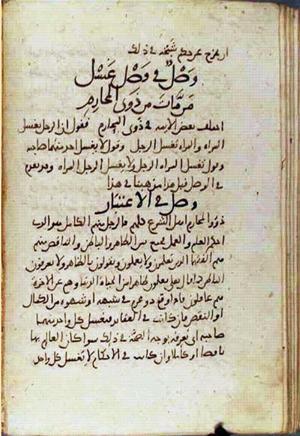
Volume du manuscrit 7 · Page 307

Manuscrit de Konya

Ouvrir la source arabeOuvrir la traduction anglaise

Arabe

أن يخرج عن حكم شيخه في ذٰلك.

وصل في فصل غسل من مات من ذوي المحارم

اختلف قول بعض الأئمة في ذوي المحارم، فقول إن الرجل يغسل المرأة، والمرأة تغسل الرجل، وقول لا يغسل أحد منهما صاحبه، وقول تغسل المرأة الرجل، ولا يغسل الرجل المرأة، وقد تقدم في الوصل قبل هٰذا مذهبنا في هٰذا.

وصل في الاعتبار

ذوو المحارم (هم) أهل الشرع كلهم، فالرجل منهم الكامل، هو الذي أحكم العلم والعمل، فجمع بين الظاهر والباطن، والناقص منهم هم الفقهاء الذين يعلمون ولا يعملون[93] ويقولون بالظاهر ولا يعرفون الباطن، كما قال تعالى: ﴿يَعْلَمُونَ ظاهِراً من الْحَياةِ الدُّنْيا وهُمْ عَنِ الْآخِرَةِ هُمْ غافِلُونَ﴾ [الروم: ٧].

فإذا وقع ذو محرم رجل من أهل الشرع في شبهة، أو شهوة، من الكمال، أو النقص، فإن كانت في العقائد، فيغسل كل واحد منهما صاحبه، أي يعرفه بوجه الصحة في ذٰلك، سواء كان العالم بها، ناقصا، أو كاملا.

وإن كانت في الأحكام، لا يغسل كل واحد

Notes

[93]

(صُحح التقابل إلى «يعلمون ولا يعملون» بمقابلة الطبعة الأحدث.)
Anglais

depart from his shaykh’s authority.

Continuation on the Section Concerning Washing a Deceased Relative Forbidden in Marriage

Some leading scholars have held differing opinions about relatives forbidden in marriage. One opinion is that a man washes a woman and a woman washes a man. Another is that neither washes the other. Another is that a woman washes a man but a man does not wash a woman. Our position has already been stated in the preceding Continuation.

Continuation on the Inward Application

The relatives forbidden in marriage are all the people of the revealed law. The complete man among them is one who has mastered knowledge and action, combining the outward and inward. The incomplete among them are the jurists who know but do not act,[93] adhere to the outward, and do not know the inward. As He, exalted is He, said, “They know an outward aspect of the life of this world, but they are heedless of the Hereafter” [al-Rum 30:7].

If a person of the revealed law who belongs to these relatives falls into a doubt or an appetite, whether complete or incomplete, then if it concerns beliefs, either may wash the other, that is, acquaint him with the sound aspect of the matter, whether the one who knows it is incomplete or complete.

If it concerns legal rulings, neither

Notes

[93]

(The contrast was corrected to “know but do not act” by comparison with the newer edition.)

Translator’s note TN2201-1: Relatives forbidden in marriage are maḥārim. In the inward application, the shared revealed law provides the bond of kinship, and the difference between complete and incomplete people is mapped onto the two sexes in the legal question.

Image du manuscritVolume du manuscrit 7 · Page 307

Les textes arabe et anglais sont reliés par le même identifiant de page de Konya. La répartition est approximative ; vérifiez le manuscrit.

Référence de la source du Caire

Ibn al-Arabi, The Meccan Revelations — Volume du manuscrit 7 · Page 307 — https://www.futmak.com/francais/konya/pages.php?id=2201&text=both