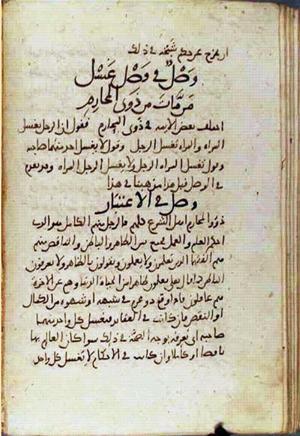
depart from his shaykh’s authority.
Continuation on the Section Concerning Washing a Deceased Relative Forbidden in Marriage
Some leading scholars have held differing opinions about relatives forbidden in marriage. One opinion is that a man washes a woman and a woman washes a man. Another is that neither washes the other. Another is that a woman washes a man but a man does not wash a woman. Our position has already been stated in the preceding Continuation.
Continuation on the Inward Application
The relatives forbidden in marriage are all the people of the revealed law. The complete man among them is one who has mastered knowledge and action, combining the outward and inward. The incomplete among them are the jurists who know but do not act,[93] adhere to the outward, and do not know the inward. As He, exalted is He, said, “They know an outward aspect of the life of this world, but they are heedless of the Hereafter” [al-Rum 30:7].
If a person of the revealed law who belongs to these relatives falls into a doubt or an appetite, whether complete or incomplete, then if it concerns beliefs, either may wash the other, that is, acquaint him with the sound aspect of the matter, whether the one who knows it is incomplete or complete.
If it concerns legal rulings, neither
Notes
[93]
(The contrast was corrected to “know but do not act” by comparison with the newer edition.)
Translator’s note TN2201-1: Relatives forbidden in marriage are maḥārim. In the inward application, the shared revealed law provides the bond of kinship, and the difference between complete and incomplete people is mapped onto the two sexes in the legal question.