
Futmak · الفتوحات المكية · Meccan Revelations

Les Futûhât al-Makkiyya

Volume du manuscrit 3 · Page 295

Manuscrit de Konya

Ouvrir la source arabeOuvrir la traduction anglaise

Arabe

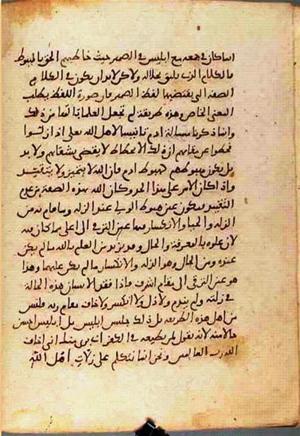
إنما كانت في جمعه مع إبليس في الضمير حيث خاطبهم الحق بالهبوط بالكلام الذي يليق بجلاله.

ولكن لا بد أن يكون في الكلام الصفة التي يقتضيها لفظ الضمير، فإن صورة اللفظ يطلب المعنى الخاص. وهذه طريقة لم تجعل العلماء بالَها من ذٰلك.

(زلة الولي والانكسار والترقي)

وإنما ذكرنا مسألة آدم تأنيسا لأهل الله تعالى إذا زلّوا فحطوا عن مقامهم أن ذٰلك الانحطاط لا يقضي بشقائهم ولا بد، بل يكون هبوطهم كهبوط آدم، فإن الله لا يتحيز ولا يتقيد.

وإذا كان الأمر على هٰذا الحد، وكان الله بهذه الصفة من عدم التقييد، فيكون عين هبوط الولي عند الزلة وما قام به من الذلة والحياء والانكسار فيها عين الترقي إلى أعلى مما كان فيه. لأن علوه بالمعرفة والحال، وقد يزيد من العلم بالله ما لم يكن عنده ومن الحال، وهو الذلة والانكسار، ما لم يكن عليهما، وهٰذا هو عين الترقي إلى مقام أشرف.

فإذا فقد الإنسان هذه الحالة في زلته ولم يندم ولا ذلّ ولا انكسر ولا ذل ولا خاف مقام ربه، فليس من أهل هذه الطريقة، بل ذٰلك جليس إبليس. بل إبليس أحسن حالا منه، لأنه يقول لمن يطيعه في الكفر: ﴿إِنِّي بَرِيءٌ مِنْكَ إِنِّي أَخافُ الله رَبَّ الْعالَمِينَ﴾ [الحشر: ١٦].

ونحن إنما نتكلم على زلات أهل الله
Anglais

lay only in combining him with Iblis in the pronoun, when the Real addressed them concerning descent through speech befitting His majesty.

Yet the speech must possess the characteristic required by the form of the pronoun, for the form of the expression requires its particular meaning. This is an approach to which the learned have not given their attention.

(The Saint’s Lapse, Brokenness, and Ascent)

We have mentioned Adam’s case only to reassure the people of God Most High when they slip and are brought down from their station: such a descent does not necessarily decree their wretchedness. Rather, their descent may be like Adam’s, for God occupies no spatial location and is subject to no restriction.

Since this is how the matter stands, and God possesses this attribute of being unrestricted, the saint’s very descent at the time of his lapse, together with the lowliness, shame, and brokenness arising in him, is itself ascent to something higher than his previous state. His elevation is through knowledge and state. He may gain knowledge of God that he did not previously possess, and a state—lowliness and brokenness—that he did not previously occupy. This is ascent itself to a nobler station.

If a person lacks this condition in his lapse, neither regrets it nor becomes lowly, neither becomes broken nor becomes lowly, nor fears standing before his Lord, he does not belong to the people of this path. Rather, he is Iblis’s companion. Indeed, Iblis is in a better state than he, for he says to whoever obeys him in unbelief, “I am free of you; I fear God, the Lord of the worlds” [al-Hashr 59:16].

We are speaking only of the lapses of the people of God

Image du manuscritVolume du manuscrit 3 · Page 295

Les textes arabe et anglais sont reliés par le même identifiant de page de Konya. La répartition est approximative ; vérifiez le manuscrit.

Référence de la source du Caire

Ibn al-Arabi, The Meccan Revelations — Volume du manuscrit 3 · Page 295 — https://www.futmak.com/francais/konya/pages.php?id=937&text=both