
Futmak · الفتوحات المكية · Meccan Revelations

Les Futûhât al-Makkiyya

Volume du manuscrit 30 · Page 120

Manuscrit de Konya

Ouvrir la source arabeOuvrir la traduction anglaise

Arabe

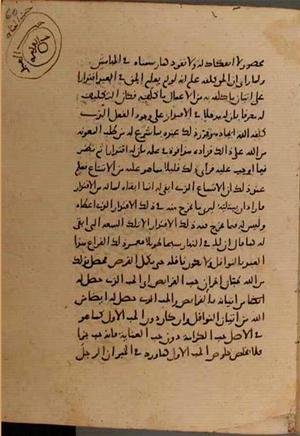
محصور لا انفكاك له ولا نفوذ، كما رسمناه في الهامش[31].

(التكليف والاقتدار)

ولما رأى أن الحق كلفه، علم أنه لو لم يعلم الحق في العبد اقتدارا على إتيان ما كلفه به من الأعمال، ما كلفه به. فكان التكليف له معرفا بأن له مدخلا في الاقتدار على وجود الفعل الذي كلفه الله إيجاده.

وقرر ذٰلك عنده بما شرع له من طلب المعونة من الله على ذٰلك، فزاده هٰذا قوة في علمه بأن له اقتدارا.

(السعة التي أبقيت للنوافل)

ثم نظر فيما أوجب الحقُّ عليه، فرأى ذٰلك قليلا مما هو عليه من الاتساع، فعلم عند ذٰلك أن الاتساع الذي أبقى له إنما أبقاه لما له من الاقتدار. فأراد أن يبتليه ليرى ما يخرج منه في ذٰلك الاقتدار الذي أعطاه.

وليس له فيما يخرج فيه ذٰلك الاقتدار إلا تلك السعة التي أبقى له كما قال: ﴿إِنَّ لَكَ في النَّهارِ سَبْحاً طَوِيلًا﴾ [المزمل: ٧].

فعمر ذٰلك الفراغ هٰذا العبد بالنوافل، ولا يكون نافلة حتى يكمل الفرض. فحصل بذٰلك من الله حبان آخران[32]: حب الفرائض ـ أي الحب الذي حصل له من إتيانه بالفرائض ـ والحب الذي حصل له أيضا من الله من إتيان النوافل، وإن كان دون الحب الأول، كما هو في الأصل حب الكرامة دون حب العناية؛ فإنه حب جزاء، فلا يخلص خلوص الحب الأول.

(الحب المبتدأ وحب الجزاء)

كما ورد في الخبر أن الرجل

Notes

[31]

(يمثل الرسم حب العبد محصورًا بين حب العناية وحب الكرامة، وفق التفصيل السابق في النص.)

[32]

(كان الرسم في النسخة السابقة «حبان آخر إن»، وصُحّح إلى «حبان آخران» بمقابلة الطبعة الجديدة (ج١٠، ص٤٣٦).)
Anglais

enclosed, with neither release nor passage, as we have drawn in the margin[31].

(Obligation and Power)

When he sees that the Real has charged him with obligations, he knows that, had the Real not known within the servant a power to perform the acts He charged him with, He would not have charged him with them. Obligation therefore acquaints him with his having a part in the power to bring into existence the act God has charged him to produce.

He confirms this for him through prescribing the seeking of God’s assistance in it, further strengthening his knowledge that he possesses power.

(The Scope Left for Supererogatory Acts)

He then considers what the Real has made obligatory upon him and sees it as little compared with the scope he possesses. He knows that the scope left for him has been left because of his power. He wished to test him, to see what would issue from him through the power He had given him.

He has no field in which to expend that power except the scope left for him, as He said, “By day you have a long course” [al-Muzzammil 73:7].

This servant fills that free space with supererogatory acts, which are not supererogatory until the obligatory is complete. He thereby obtains two further loves from God[32]: the love of obligatory acts, meaning the love he gains through performing obligatory acts, and the love he also gains from God through performing supererogatory acts. Although the latter is below the former, so too, in the original relation, the love of honor is below the love of providential care. It is a love of recompense, not as pure as the first love.

(Initiating Love and Recompensing Love)

Thus a report relates that, when a man

Notes

[31]

(The drawing depicts the servant’s love enclosed between the love of providential care and the love of honor, according to the preceding account.)

[32]

(The previous version read ḥubbān ākhar in. It was corrected to ḥubbān ākharān, “two further loves,” by comparison with the new edition, volume 10, page 436.)

Translator’s note: The supplied text refers to a marginal drawing, but no diagram image is provided.

Image du manuscritVolume du manuscrit 30 · Page 120

Les textes arabe et anglais sont reliés par le même identifiant de page de Konya. La répartition est approximative ; vérifiez le manuscrit.

Référence de la source du Caire

Ibn al-Arabi, The Meccan Revelations — Volume du manuscrit 30 · Page 120 — https://www.futmak.com/francais/konya/pages.php?id=8928&text=both