
Futmak · الفتوحات المكية · Meccan Revelations

Les Futûhât al-Makkiyya

Volume du manuscrit 28 · Page 206

Manuscrit de Konya

Ouvrir la source arabeOuvrir la traduction anglaise

Arabe

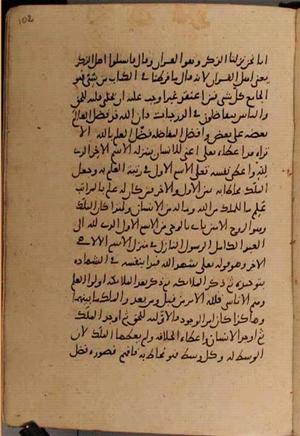
يقول الحق: ما ثم شيء أظهر إليه، لأني عين كل شيء، فما أظهر إلا لمن ليست له شيئية الوجود.

فلا تراني إلا الممكنات في شيئية ثبوتها، فما ظهرت إليها، لأنها لم تزل معدومة، وأنا لم أزل موجودا.

فوجودي عين ظهوري، ولا ينبغي أن يكون الأمر إلا هكذا.

(الأسماء وأحكام الصور)

ولما كانت الأحكام[77] فيما ظهر هي لأسمائي، وفي نفس الأمر لأعيان الممكنات، والوجود عيني، لا غيري، وفصلت الأحكام الإمكانية الصور في العين الواحدة، كما يقول أهل النظر في تفصيل الأنواع في الجنس، وتفصيل الأشخاص في النوع، كذٰلك تفصيل الصور الإمكانية في العين.

وترى الأسماء أنا مسماها، أعني الأسماء الحسنى، فتجعل الأثر لها، وفي الحقيقة ما الأثر إلا لأعيان الممكنات.

ولهٰذا ينطلق على صور أسماء الممكنات، ومن أسماء الممكنات أسماء الله، فلها نسبتان، نسبة إلى الله تعالى، ونسبة إلى صور الممكنات.

(قرب الصورة من العين)

فالحق ليس بظاهر لأعيان صور الممكنات، من حيث ما هي صور لها، لا من حيث إنها ظهرت في عين الوجود الحق.

والشيء إذا كان في الشيء، بمثل هذه الكينونة، من القرب لا يمكن أن يراه، فلا يمكن

Notes

[77]

(كان الرسم في النسخة السابقة «إلا حكم»، وصُحّح إلى «الأحكام» بمقابلة الطبعة الجديدة (ج١٠، ص١٥١).)
Anglais

The Real says: There is no thing to which I might appear, because I am the very entity of everything. I appear only to one who does not possess the thingness of existence.

Only possible beings see Me, in the thingness of their fixity. I have not appeared to them, for they have never ceased to be nonexistent, and I have never ceased to be existent.

My existence is My very appearance. The affair should be only thus.

(Names and the Rulings of Forms)

The rulings[77] within what appears belong to My Names, while in actuality they belong to the entities of possible beings. Existence is My entity, not other than Me. The rulings of possibility distinguish forms within the one entity, just as speculative thinkers speak of the differentiation of species within a genus and individuals within a species. Such is the differentiation of possible forms within the entity.

You see the Names, whose referent I am—I mean the Most Beautiful Names—and you attribute the effect to them. In reality, however, the effect belongs only to the entities of possible beings.

For this reason the names of possible beings are applied to forms, and among the names of possible beings are God’s Names. They have two relations: a relation to God Most High and a relation to the forms of possible beings.

(The Nearness of the Form to the Entity)

The Real is not apparent to the entities of the forms of possible beings insofar as they are their forms, not insofar as they have appeared within the entity of the Real’s existence.

When a thing is within a thing in this manner of being and nearness, it cannot see it, so it cannot

Notes

[77]

(The previous copy read إلا حكم; it was corrected to الأحكام, ‘the rulings,’ by comparison with the new edition, volume 10, page 151.)

Translator’s note: The unvocalized verbs ترى, “see,” and تجعل, “attribute,” may also take “the Names” as their subject. The main text reads both as addressing the reader; the subject is not textually settled.

Image du manuscritVolume du manuscrit 28 · Page 206

Les textes arabe et anglais sont reliés par le même identifiant de page de Konya. La répartition est approximative ; vérifiez le manuscrit.

Référence de la source du Caire

Ibn al-Arabi, The Meccan Revelations — Volume du manuscrit 28 · Page 206 — https://www.futmak.com/francais/konya/pages.php?id=8532&text=both