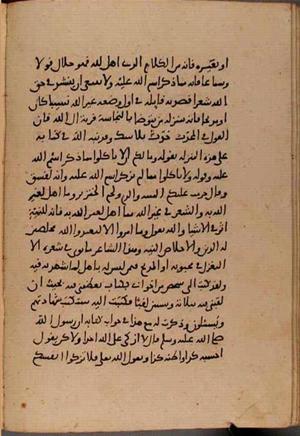
for all of it consists of divine gnoses in different forms: amorous preludes, praise, women's names and descriptions, rivers, places, and stars.
We have commented upon a verse composition of ours in Mecca called The Interpreter of Longings, in a book we named The Treasures and Precious Attachments, al-Dhakhāʾir wa-l-Aʿlāq[59]. One of the jurists of Aleppo objected to our saying that everything we composed within this Interpreter intended only divine gnoses and their like. He said: He did this only because he is associated with religion and did not wish such love poetry and amorous preludes to be attributed to him.
May God reward him well for this statement, for it stirred our motives to produce this commentary[60]. People benefited from it, and we showed him and his like the truth of what we intended and claimed.
When he examined its commentary, he repented to God of this and recanted.
(Possibility and Verification before Condemnation)
If we saw a man looking at a woman's face while seeking her in marriage, without knowing that he was doing so, and were fair-minded in the matter, we would not rush to condemn him while ignorant of his state, until asking what prompted him.
If he said, or we were told, that he was seeking her in marriage, or was a physician and she had an illness requiring the physician to look at her face, we would know he had looked only at what he was permitted to look at in her. Indeed, his looking is worship, since a command concerning this has come from the Messenger, God's blessings and peace be upon him.
He should not be condemned from the outset with this possibility present. The objector's condemning him is no more fitting than condemning the objector
Notes
[59]
(The previous copy read ‘al-Dhakhāʾir wa-l-Aghlāq’; this was corrected to ‘al-Dhakhāʾir wa-l-Aʿlāq’ by comparison with the new edition, vol. 10, p. 115.)
[60]
(The previous copy read ‘ḥaramat dawāʿīnā’ [deprived our motives]; this was corrected to ‘ḥarrakat dawāʿīnā’ [stirred our motives] by comparison with the new edition, vol. 10, p. 115.)