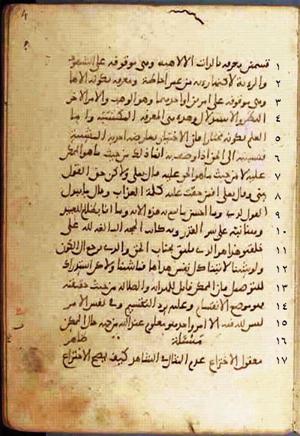
two divisions: knowledge of the Divine Essence, which depends on witnessing and vision—though a vision without encompassing; and knowledge of His being God, which depends on two things, or one of them.[7] One is bestowal; the other is reflection and inference, and this is acquired knowledge.
As for knowing Him as one who chooses, choice is opposed by the oneness of the divine will. When choice is attributed to the Real as a description of Him, this is only from the standpoint of the possible thing’s condition, not from the standpoint of the Real’s condition. He says, exalted is He: “But the word from Me has come due” [al-Sajdah 32:13]. He also says: “Is one against whom the word of punishment has come due…?” [al-Zumar 39:19]. And He says: “The word is not changed with Me.”
How beautifully He completes this verse: “Nor am I unjust to the servants” [Qaf 50:29]. Here He draws attention to the secret of destiny, through which God has the conclusive argument against His creation. This is what befits the presence of the Real. What refers to the cosmic being is: “Had We willed, We would have given every soul its guidance” [al-Sajdah 32:13]. But We did not will it; “but” is a qualification that connects the statements.
For the possible thing, by virtue of its reality, is receptive to guidance and misguidance. It is the locus of division, and division applies to it. In the actual affair, however, God has only one command concerning it, known to God from the standpoint of the possible thing’s state.
Question
The apparent intelligible meaning of original invention is the absence of an exemplar in the witnessed realm. How can original invention apply—
Notes
[7]
(The context distinguishes bestowed knowledge from knowledge acquired through reflection, while distinguishing both from the knowledge of the Essence mentioned before them.)