
Futmak · الفتوحات المكية · Meccan Revelations

Les Futûhât al-Makkiyya

Volume du manuscrit 18 · Page 193

Manuscrit de Konya

Ouvrir la source arabeOuvrir la traduction anglaise

Arabe

مراتب الإسكار؟

(السكر العقلي)

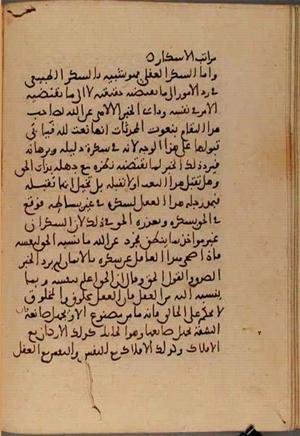
وأما السكر العقلي فهو شبيه بالسكر الطبيعي في رد الأمور إلى ما تقتضيه حقيقته، لا إلى ما يقتضيه الأمر في نفسه. ويأتي الخبر الإلهي عن الله لصاحب هٰذا المقام بنعوت المحدثات إنها نعت لله، فيأبى قبولها على هٰذا الوجه، لأنه في سكرة دليله وبرهانه؛ فيرد ذٰلك الخبر لما يقتضيه نظره، مع جهله بذات الحق وهل تقبل هٰذا النعت أو لا تقبله، بل تخيل أنها تقبله.

فيمد رجله هٰذا العقل لسكره في غير بساطه، فوقع في الحق بسكره، ويعذره الحق في ذٰلك لأن السكران غير مؤاخذ بما ينطق؛ فجرد عن الله ما نسبه الحق لنفسه. فإذا صحا هٰذا العاقل عن سكره بالإيمان لم يرد الخبر الصدق والقول الحق.

وقال إن الحق أعلم بنفسه وبما ينسبه إليه من العقل، فإن العقل مخلوق، والمخلوق لا يحكم على الخالق؛ فإنه ما من مصنوع إلا ويجهل صانعه. فإن الشقة تجهل صانعها وهو الحائك، كذٰلك الأركان مع الأفلاك، وكذٰلك الأفلاك مع النفس، والنفس مع العقل،
Anglais

ranks of intoxication?

(Intellectual Intoxication)

Intellectual intoxication resembles natural intoxication in returning affairs to what its own reality requires, not what the affair requires in itself. A divine report concerning God comes to this station’s possessor with originated things’ descriptions as descriptions of God. He refuses to accept them in this way, intoxicated by his indication and proof. He refers that report to what his consideration requires, despite ignorance of the Real’s Essence and whether it accepts this description or not. Rather, he imagined that it accepts it.

Drunk, this intellect stretches its foot beyond its own carpet and presumes upon the Real through its intoxication. The Real excuses it, for the intoxicated is not held accountable for what he utters. It strips from God what the Real attributed to Himself. When this rational person becomes sober from his intoxication through faith, he does not reject the true report and right utterance.

He says the Real knows Himself and what He attributes to Himself better than intellect. Intellect is created, and the created does not judge the Creator. Every made thing is ignorant of its maker. A piece of cloth does not know its maker, the weaver. Likewise the elements in relation to the spheres, the spheres in relation to the Soul, and the Soul in relation to the Intellect,

Notes

Translator’s note TN5519-1: The supplied closing clause is affirmative, bal takhayyala annahā taqbaluhu, ‘rather, he imagined that it accepts it.’ Its precise link to the preceding description and intellectual interpretation is compressed; no negation has been inserted.

Image du manuscritVolume du manuscrit 18 · Page 193

Les textes arabe et anglais sont reliés par le même identifiant de page de Konya. La répartition est approximative ; vérifiez le manuscrit.

Référence de la source du Caire

Ibn al-Arabi, The Meccan Revelations — Volume du manuscrit 18 · Page 193 — https://www.futmak.com/francais/konya/pages.php?id=5519&text=both