
Futmak · الفتوحات المكية · Meccan Revelations

Les Futûhât al-Makkiyya

Volume du manuscrit 17 · Page 112

Manuscrit de Konya

Ouvrir la source arabeOuvrir la traduction anglaise

Arabe

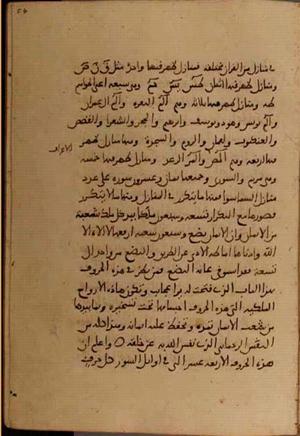
في منازل من القرآن مختلفة، فمنازل ظهر فيها واحد، مثل: «ق»، «ن»، «ص». ومنازل ظهر فيها اثنان،: «طس»، «يس»، «حم»، وهي سبعة أعني الحواميم، «طه».

ومنازل ظهر فيها ثلاثة، وهم: «الم» البقرة، و«الم» آل عمران، و«الر» يونس وهود ويوسف وإبراهيم والحجر، و«طسم» الشعراء والقصص و«الم» العنكبوت ولقمان والروم والسجدة[23]. ومنها منازل ظهر فيها أربعة، وهم: «المص» الأعراف، و«المر» الرعد. ومنازل ظهر فيها خمسة، وهي مريم والشورى.

وجميعها تسع وعشرون سورة على عدد منازل السماء سواء، فمنها ما يتكرر في المنازل ومنها ما لا يتكرر. فصورها مع التكرار تسعة وسبعون ملكا، بيد كل ملك شعبة من الايمان، و«إن الايمان بضع وسبعون شعبة، أرفعها لا إله إلا الله، وأدناها إماطة الأذى عن الطريق». والبضع من واحد إلى تسعة، فقد استوفى غاية البضع.

فمن نظر في هذه الحروف بهٰذا الباب الذي فتحت له يرى عجائب، وتكون هذه الأرواح الملكية التي هذه الحروف أجسامها تحت تسخيره، وبما بيدها من شعب الايمان تمده وتحفظ عليه إيمانه. وهٰذا كله من النَّفَس الرحماني الذي نفس الله به عن خلقه.

(القمر وقوى الحروف)

واعلم أن هذه الحروف الأربعة عشر التي في أوائل السور، كل حرف

Notes

[23]

(أُعيد الفصل بين مجموعات الحروف وأسماء السور بمقابلة الطبعة الجديدة، واستُدرك «الم» قبل العنكبوت ولقمان والروم والسجدة.)
Anglais

in different locations within the Qurʾan. In some, one appeared, such as “ق” (Qaf), “ن” (Nun), and “ص” (Ṣad). In others, two appeared: “طس” (Ṭaʾ Sin), “يس” (Yaʾ Sin), “حم” (Ḥaʾ Mim)—these are seven, I mean the Ḥaʾ-Mim surahs—and “طه” (Ṭaʾ Haʾ).

In some locations three appeared: “الم” (Alif Lam Mim) in al-Baqarah, “الم” in Al ʿImran, “الر” (Alif Lam Raʾ) in Yunus, Hud, Yusuf, Ibrahim, and al-Hijr, “طسم” (Ṭaʾ Sin Mim) in al-Shuʿaraʾ and al-Qasas, and “الم” in al-ʿAnkabut, Luqman, al-Rum, and al-Sajdah.[23] In some locations four appeared: “المص” (Alif Lam Mim Ṣad) in al-Aʿraf and “المر” (Alif Lam Mim Raʾ) in al-Raʿd. In others five appeared, namely Maryam and al-Shura.

Altogether they are twenty-nine surahs, exactly the number of mansions of the sky. Some recur in the locations and some do not. Their forms, counting repetition, are seventy-nine angels. In every angel’s hand is a branch of faith. “Faith has seventy-odd branches: the highest is ‘There is no god but God,’ and the lowest is removing harm from the road.” The word biḍʿ denotes from one to nine, so its utmost limit has been fully reached.

Whoever considers these letters through this door opened to him sees marvels. These angelic spirits, whose bodies are these letters, come under his disposal. Through the branches of faith in their hands they supply him with succor and preserve his faith. All this comes from the Breath of the All-Merciful through which God relieved His creation.

(The Moon and the Letters’ Powers)

Know that each of these fourteen letters at the beginnings of surahs

Notes

[23]

(The separation between the groups of letters and the surah names was restored by comparison with the new edition, and “الم” was supplied before al-ʿAnkabut, Luqman, al-Rum, and al-Sajdah.)

Translator’s note TN5122-1: The stated twenty-nine and seventy-nine are retained as printed. The twenty-nine “mansions of the sky” are not normalized to the earlier twenty-eight-day/mansion cycle.

Image du manuscritVolume du manuscrit 17 · Page 112

Les textes arabe et anglais sont reliés par le même identifiant de page de Konya. La répartition est approximative ; vérifiez le manuscrit.

Référence de la source du Caire

Ibn al-Arabi, The Meccan Revelations — Volume du manuscrit 17 · Page 112 — https://www.futmak.com/francais/konya/pages.php?id=5122&text=both