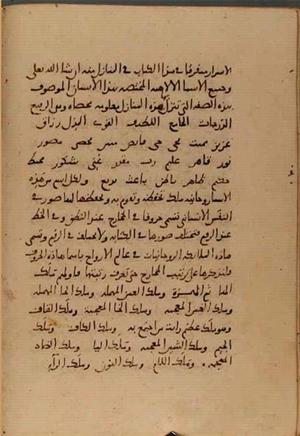
secrets in scattered places within this book, in its chapters on abodes, God Most High willing.
(The Names, the Letters, and Their Spirits)
All the divine names particular to the human being described by this attribute through which he occupies these abodes are known and enumerated: the Exalted in Degrees, the Gatherer, the Subtle, the Strong, the Abaser, the Provider, the Mighty, the Giver of Death, the Giver of Life, the Living, the Contractor, the Clear, the Enumerator, the Form-Giver, the Light, the Subduer, the All-Knowing, the Lord, the Determiner, the Independent, the Most Thankful, the All-Encompassing, the Wise, the Manifest, the Hidden, the Resurrector, the Incomparable Originator.
Each of these names has an angel’s spirituality that preserves it and upholds it, and preserves them. It has forms within human breath called letters, at the articulations when spoken and in script when inscribed. Their forms differ in writing but do not differ in inscription. These spiritual angels are called in the world of spirits by the names of these letters. Let us mention them in the order of articulation, so that their rank may be known.
The first is the angel of haʾ, then hamza, the angel of undotted ʿayn, the angel of undotted ḥaʾ, the angel of dotted ghayn, the angel of dotted khaʾ, the angel of qaf—a mighty angel; I have seen someone who met him—the angel of kaf, the angel of jim, the angel of dotted shin, the angel of yaʾ, the angel of dotted ḍad, the angel of lam, and the angel of nun.
The angel of raʾ,
Notes
Translator’s note TN5119-1: In the clause about an angel’s spirituality, the final feminine pronoun in wa-taḥfaẓuhā has an unclear referent; ‘preserves them’ takes it with the preceding names. The supplied distinction between kitābah, writing, and raqm, inscription, is retained without substituting numerical identity for the latter.