Futmak · الفتوحات المكية · Meccan Revelations

Les Futûhât al-Makkiyya

Volume du manuscrit 16 · Page 167

Manuscrit de Konya

Ouvrir la source arabeOuvrir la traduction anglaise

Arabe

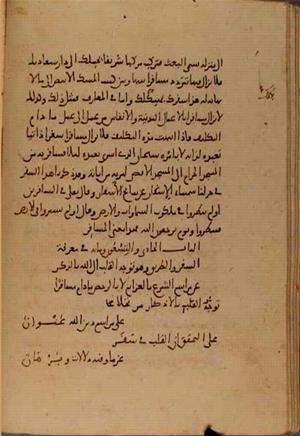
إلى منزلة تسمى البعث فتركب مركبا شريفا يحملك إلى دار سعادتك فلا تزال فيها تتردد مسافرا بينها وبين كثيب المسك الأبيض إلى ما لا نهاية له.

هٰذا سفرك بهيكلك. وأما في المعارف، فمثل ذٰلك. وكذٰلك لا تزال مسافرا بالأعمال البدنية والأنفاس من عمل إلى عمل ما دام التكليف فإذا انتهت مدة التكليف، فلا تزال مسافرا سفرا ذاتيا تعبده لذاته، لا بأمره. ﴿سُبْحانَ الَّذِي أَسْرى بِعَبْدِهِ لَيْلًا﴾ فسافر به ﴿من الْمَسْجِدِ الْحَرامِ إِلَى الْمَسْجِدِ الْأَقْصَى﴾ [الإسراء: ١] ليريه من آياته.

وقد ذكرنا هٰذا السفر في جزء لنا سميناه الأسفار عن نتائج الأسفار وقال تعالى في المسافرين: ﴿أولم يَنْظُرُوا في مَلَكُوتِ السَّماواتِ والْأَرْضِ﴾ [الأعراف: ١٨٥] وقال: ﴿أولم يَسِيرُوا في الْأَرْضِ فَيَنْظُرُوا﴾ [الروم: ٩] ﴿ويَوْمَ يُرْجَعُونَ إِلَيْهِ﴾ [النور: ٦٤] فهٰذا معنى المسافر.

الباب الحادي والتسعون ومائة في معرفة السفر والطريق وهو توجه القلب إلى الله بالذكر عن مراسم الشرع بالعزائم لا بالرخص ما دام مسافرا

توجه القلب بالأذكار مرتحلا

على مراسم دين الله عنوان‏

على التحقق إن القلب في سفر

عزما وفيه دلالات وبرهان‏

Anglais

a stopping place called resurrection. You mount a noble mount that carries you to your abode of felicity, and within it you keep traveling back and forth between it and the dune of white musk without end.

This is your travel through your bodily structure. In gnoses it is the same. Likewise you continue traveling through bodily works and breaths, from act to act while obligation lasts. When the period of obligation ends, you continue an essential travel, worshipping Him for His Essence, not through His command. “Glory be to Him who carried His servant by night”—traveling with him—“from the Sacred Mosque to the Furthest Mosque” [al-Isrāʾ 17:1], to show him His signs.

We have mentioned this travel in a treatise of ours called The Unveiling of the Results of Travels. He said, exalted is He, concerning travelers, “Have they not considered the unseen dominion of the heavens and the earth?” [al-Aʿraf 7:185], and “Have they not traveled in the earth and considered?” [al-Rum 30:9], and “The day they are returned to Him” [al-Nur 24:64]. This is the meaning of the traveler.

Chapter One Hundred and Ninety-One: On Knowing Travel and the Path, the Heart’s Turning toward God through Remembrance according to the Revealed Law’s Prescriptions, through Firm Requirements Rather Than Concessions, while It Remains Traveling

The heart’s turning, traveling through remembrances,

according to the prescriptions of God’s religion, is a sign

of realization that the heart is upon a journey

resolutely; within it are indications and proof.

Notes

Translator’s note TN4861-1: The treatise title plays upon isfār, ‘unveiling,’ and asfār, ‘travels’: al-Isfār ʿan natāʾij al-asfār. The supplied first word is written الأسفار; its first vowel is read here as i in view of the unveiling/travels relation.

Image du manuscritVolume du manuscrit 16 · Page 167

Les textes arabe et anglais sont reliés par le même identifiant de page de Konya. La répartition est approximative ; vérifiez le manuscrit.

Référence de la source du Caire

Ibn al-Arabi, The Meccan Revelations — Volume du manuscrit 16 · Page 167 — https://www.futmak.com/francais/konya/pages.php?id=4861&text=both