Les Futûhât al-Makkiyya

Volume du manuscrit 16 · Page 94

Manuscrit de Konya

Ouvrir la source arabeOuvrir la traduction anglaise

Arabe

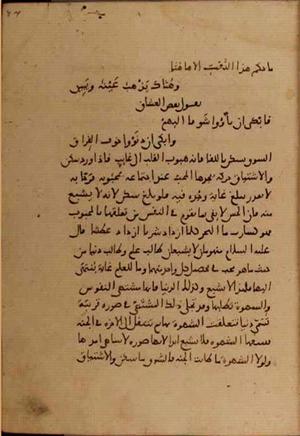
ما حكم هٰذا النعت إلا هاهنا

وهناك يذهب عينه ويبين‏

يقول بعض العشاق:

فأبكى إن نأوا شوقا إليهم وأبكي إن دنوا خوف الفراق

الشوق يسكن باللقاء؛ فإنه هبوب القلب إلى غائب فإذا ورد سكن. والاشتياق حركة يجدها المحب عند اجتماعه بمحبوبه فرحا به لا يقدر يبلغ غاية وجده فيه فلو بلغ سكن؛ لأنه لا يشبع منه فإن الحس لا يفي بما يقوم في النفس من تعلقها بالمحبوب فهو كشارب ماء البحر كلما ازداد شربا، ازداد عطشا.

قال ع: «منهومان لا يشبعان: طالب علم وطالب دنيا» من حيث ما هو محب في تحصيل كل واحد منهما وما للعلم غاية ينتهي إليها، فلهٰذا لا يشبع.

وكذٰلك الدنيا فإنها مشتهي النفوس، والشهوة تطلبها وقد تجلى ذٰلك المشتهي في صورة قريبة تسمى دنيا فتعلقت الشهوة بها ثم تنتقل إلى الآخرة في الجنة فتتبعها الشهوة فلا تشبع أبدا؛ لأنها صورة لا يتناهى أمدها ولولا الشهوة ما طابت الجنة فالشوق (هو) ما سكن، والاشتياق (هو)
Anglais

This description rules only here;

there its very entity vanishes and departs.

One ardent lover says:

I weep with longing when they go far, and weep with fear of parting when they draw near.

Longing grows still at meeting: it is the heart’s surging toward an absent one, becoming still when he arrives. Yearning is a movement the lover finds when meeting his beloved, through joy in him. He cannot reach the limit of his ecstasy in him—if he reached it, he would grow still—because he is never sated with him. Sense cannot fulfill the self’s attachment to the beloved. He is like one drinking seawater: the more he drinks, the thirstier he grows.

He, peace be upon him, said, “Two greedy seekers are never sated: a seeker of knowledge and a seeker of this world,” insofar as each loves to attain one of them. Knowledge has no end to reach, so he is never sated.

Likewise this world is what selves desire, and desire seeks it. The desired thing appears in a near form called dunyā, this world, and desire attaches to it. Then it passes to the Hereafter in the Garden, and desire follows, never sated, for it is a form whose term is endless. Without desire the Garden would not be pleasant. Longing is what has grown still, and yearning is

Notes

Translator’s note TN4788-1: Dunyā, this world, is connected here with a near form, qarībah. The endless object of desire passing to the Garden is distinguished from longing’s becoming still through meeting. The poem’s “here” and “there” remain unstated locations in the source.

Image du manuscritVolume du manuscrit 16 · Page 94

Les textes arabe et anglais sont reliés par le même identifiant de page de Konya. La répartition est approximative ; vérifiez le manuscrit.

Référence de la source du Caire

Ibn al-Arabi, The Meccan Revelations — Volume du manuscrit 16 · Page 94 — https://www.futmak.com/francais/konya/pages.php?id=4788&text=both