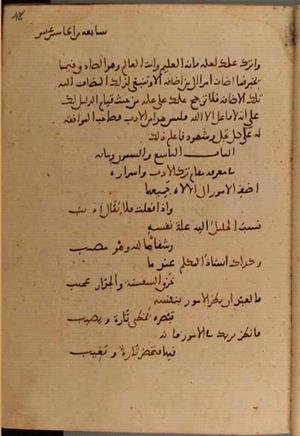
and leave your knowledge for His, for He is the All-Knowing and you are the knower. He is truthful in what He reports. He attributes a matter to someone only because that attribution befits the one to whom it is attributed.
Do not prefer your knowledge to His because proof has been established for you that there is no agent but God. This is not courtesy. Every self-disclosure and witnessing belongs to the one who agrees. Know this.
Chapter One Hundred and Sixty-Nine: Knowing the Station of Leaving Courtesy and Its Secrets
Attribute all affairs to God,
and if you do, you are not called courteous.
The Friend attributed to himself his own illness,
and its healing to God, rightly.
Likewise the teacher of the one spoken to, when
he pierced the ship; and the wall is wondrous.
If the servant considers affairs through his self,
you see him sometimes err and sometimes be right.
Consider affairs through your Lord, for He
is within them: sometimes you are present, sometimes absent.
Notes
Translator’s note TN4474-1: The poem evokes Abraham, the Friend, attributing illness to himself and healing to God, and al-Khidr, teacher of Moses, the one spoken to. The compressed line mentioning the ship and wall is retained without adding the intervening narrative. The prose requires following God’s stated attributions rather than overriding them with a proof of sole divine agency.