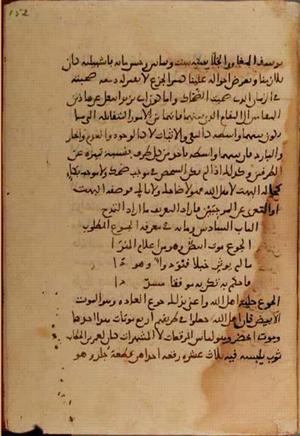
Yusuf al-Maghawir al-Jallaʾ, in the year five hundred and eighty-six in Seville. He kept close to us and presented his states to us, much distressed, his tears never ceasing. I kept company with him in the period when I kept company with the laughing one.
As for Abu Yazid’s moving from these two stations to the station between them, they are opposing affairs between which there is no intermediary, like negation and affirmation, not like existence and nonexistence or hot and cold. Between these latter there is an intermediary taking from each side a relation that distinguishes it from the two sides. Likewise, when someone has neither a cause of laughter nor a cause of weeping, as in the state of astonishment among God’s people, he is neither laughing nor weeping. His description is astonishment and being stripped of both causes. He intended to make known, not to praise himself.
Chapter One Hundred and Six: On Knowing the Hunger Sought
Hunger is white death,
and one of the signs of guidance,
as long as it does not cause confusion of mind.
It is a remedy, and it is a disease.
Exercise judgment in it, and through it be
granted success and right direction.
Hunger is the adornment of God’s people. By this I mean customary hunger, white death. God’s people have set four deaths upon their path; this is one. There is green death: wearing patched garments, not conspicuous ones. ʿUmar ibn al-Khattab had a garment he wore with thirteen patches, one of them a piece of leather, while he was
Notes
Translator’s note TN4058-1: The source distinguishes the absence of an intermediary between negation and affirmation from an intermediary between existence and nonexistence and between hot and cold. This unusual distinction is retained without harmonizing it with different formulations elsewhere.
Translator’s note TN4058-2: The name Yusuf al-Maghawir al-Jallaʾ follows the supplied يوسف المغاور الجلاء. Its vocalization is uncertain; no different identity or spelling has been substituted.