
Futmak · الفتوحات المكية · Meccan Revelations

Les Futûhât al-Makkiyya

Volume du manuscrit 13 · Page 181

Manuscrit de Konya

Ouvrir la source arabeOuvrir la traduction anglaise

Arabe

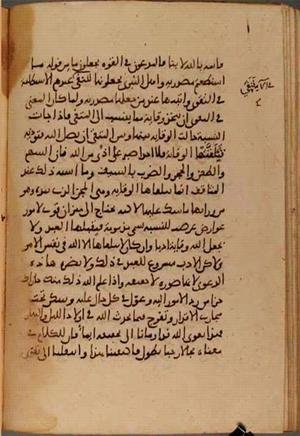
قائمة بالله لا بنا.

فالمدعون في القوة يجعلون «ما» من قوله: ﴿ما اسْتَطَعْتُمْ﴾ مصدرية، وأهل التبري يجعلونها للنفي في الآية؛ فنفى عندهم الاستطاعة في التقوى، وأثبتها عند من جعلها مصدرية.

(الوقاية وأدب النسبة)

ولما كان المعنى في التقوى أن تتخذ وقاية مما ينسب إلى المتقي، فإذا جاءت النسبة حالت الوقاية بينها وبين المتقي أن تصل إليه فتؤذيه، فتلقتها الوقاية؛ فلا أحد أصبر على أذى من الله. فإن السهم والطعن والحجر والضرب بالسيف وما أشبه ذٰلك عند المثاقف إنما تتلقاها الوقاية، وهي المجن الذي بيده[36] وهو من ورائها ماسك عليها.

لكنه يحتاج إلى ميزان قوي لأمور عوارض عرضت للنسبة تسمى مذمومة، فيقبلها العبد ولا يجعل الله وقاية أدبا، وإن كان لا يتلقاها إلا الله في نفس الأمر. ولكن الأدب مشروع للعبد في ذٰلك، ولا تضره هذه الدعوى لأنها صورة لا حقيقة.

وإذا علم الله ذٰلك منك جازاك جزاء من رد الأمور إليه، وعول في كل حال عليه، وسكن تحت مجاري الأقدار، وتفرج فيما يحدث الله في أولاد الليل والنهار. فهٰذا تقوى الله قد أومأنا إلى تحقيقه إيماء؛ فإن للكلام في معناه مجالا رحبا يطول، فاكتفينا بهٰذا وانتقلنا إلى تقوى

Notes

[36]

(المِجَنّ: الترس الذي يتلقى الضرب عن حامله. يتخذه المؤلف هنا مثلا لبيان معنى الوقاية.)
Anglais

subsists through God, not through us.

Those claiming power take mā in His saying “as much as you are able” as a nominalizing particle, while the people of renunciation take it as negation in the verse. In their understanding He denies capacity in Godwariness, while He affirms it for those who take the particle as nominalizing.

(Protection and Courtesy in Attribution)

The meaning of Godwariness is to take a shield against what is attributed to the Godwary one. When the attribution comes, the shield stands between it and the Godwary one, preventing it from reaching and harming him. The shield receives it. None is more patient in enduring injury than God. For a combatant, arrows, thrusts, stones, sword blows, and the like are received by the protection: the shield in his hand,[36] which he holds while remaining behind it.

He nevertheless needs a strong balance of discernment because of incidental matters affecting attribution that are called blameworthy. The servant accepts these and, out of courtesy, does not make God a shield, even though in the matter itself only God receives them. Courtesy in this has been prescribed for the servant, and this claim does not harm him, since it is a form, not a reality.

When God knows this of you, He rewards you as one who returns affairs to Him, relies upon Him in every state, rests beneath the courses of the allotments, and delights in what God brings forth among the offspring of night and day. We have thus given an indication of the realization of Godwariness. Speaking of its meaning has a broad and lengthy scope, so we have contented ourselves with this and moved to guarding against

Notes

[36]

(Al-mijann is the shield that receives blows instead of its bearer. The author uses it here as an example to explain protection.)

Translator’s note TN3935-1: Mā in mā istaṭaʿtum is conventionally nominalizing, yielding ‘as much as you are able.’ The author also reads it negatively for the people of renunciation, denying an independently possessed capacity. His account connects taqwā with wiqāya, a protection or shield.

Image du manuscritVolume du manuscrit 13 · Page 181

Les textes arabe et anglais sont reliés par le même identifiant de page de Konya. La répartition est approximative ; vérifiez le manuscrit.

Référence de la source du Caire

Ibn al-Arabi, The Meccan Revelations — Volume du manuscrit 13 · Page 181 — https://www.futmak.com/francais/konya/pages.php?id=3935&text=both