
Futmak · الفتوحات المكية · Meccan Revelations

Les Futûhât al-Makkiyya

Volume du manuscrit 9 · Page 203

Manuscrit de Konya

Ouvrir la source arabeOuvrir la traduction anglaise

Arabe

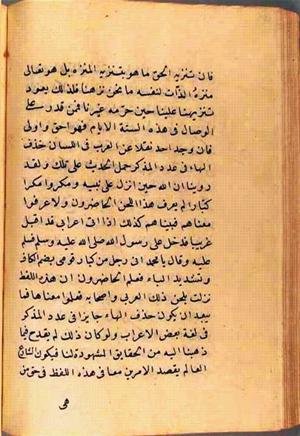
فإن تنزيه الحق ما هو بتنزيه المُنَزِّه، بل هو تعالى مُنَزَّه الذات لنفسه؛ ما نحن نزهناه. فلذٰلك يعود تنزيهنا علينا حين حرمه غيرنا. فمن قدر على الوصال في هذه الستة الأيام، فهو أحق وأولى.

فإن وجد أحد نقلا عن العرب في اللسان حذف الهاء في عدد المذكر، حمل الحديث على تلك اللغة.

ولقد روينا أن الله حين أنزل على نبيه صلى الله عليه وسلم: ﴿ومَكَرُوا مَكْراً كُبَّاراً﴾ [نوح: ٢٢]، لم يعرف هٰذا اللحن الحاضرون ولا عرفوا معناه؛ فبينا هم كذٰلك، إذ أتى أعرابي قد أقبل غريبا فدخل على رسول الله صلى الله عليه وسلم فسلم عليه وقال: «يا محمد، إني رجل من كُبَّار قومي» بضم الكاف وتشديد الباء؛ فعلم الحاضرون أن هذه اللفظة نزلت بلحن ذٰلك العربي وأصحابه، فعلموا معناها.

فما يبعد أن يكون حذف الهاء جائزا في عدد المذكر في لغة بعض الأعراب.

ولو كان ذٰلك، لم يقدح فيما ذهبنا إليه من الحقائق المشهودة لنا؛ فيكون الشارع العالم يقصد الأمرين معا في هذه اللفظة في حق من
Anglais

for the Real’s incomparability does not come from the one who declares it. His Essence is incomparable in itself. We have not made Him incomparable. Our declaring Him incomparable therefore returns to us while others are deprived of it. Whoever can fast continuously through these six days has the greater and better claim to do so.

If anyone finds a transmitted Arabic usage that drops the hāʾ in the numeral of a masculine noun, the hadith may be read according to that dialect.

We have transmitted that when God revealed to His Prophet, may God bless him and grant him peace, “They devised a mighty scheme” [Nuh 71:22], those present knew neither this form of speech nor its meaning. While they were in that state, a Bedouin arrived as a stranger, entered before the Messenger of God, may God bless him and grant him peace, greeted him, and said, “Muhammad, I am one of the great men, kubbār, of my people,” with ḍammah on the kāf and a doubled bāʾ. Those present then knew that this word had been revealed in the dialect of that Arab and his people, and they understood its meaning.

It is therefore not far-fetched that dropping the hāʾ in the numeral of a masculine noun might be permitted in the dialect of some Bedouins.

Even if that were so, it would not impair the realities we have directly witnessed. The knowing Lawgiver would intend both meanings in this expression, for someone

Image du manuscritVolume du manuscrit 9 · Page 203

Les textes arabe et anglais sont reliés par le même identifiant de page de Konya. La répartition est approximative ; vérifiez le manuscrit.

Référence de la source du Caire

Ibn al-Arabi, The Meccan Revelations — Volume du manuscrit 9 · Page 203 — https://www.futmak.com/francais/konya/pages.php?id=2727&text=both