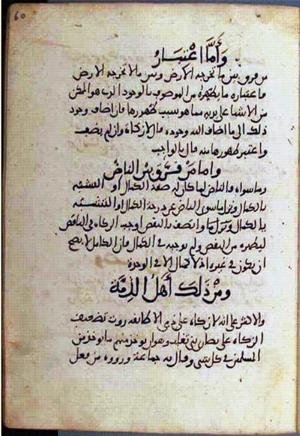
The inward application of distinguishing what the earth produces from what it does not concerns the things brought forth through the one described as existent, the possible being, who is the cause of their appearance. If he ascribes their existence to the One to whom he ascribes his own existence, he says that no almsgiving is due. If he does not make that ascription and considers their appearance from himself, he holds that it is obligatory.
As for those who distinguish coin[22] from other property, coin has the quality of completeness, or resembles completeness. Other property falls below the degree of completeness or its likeness and is characterized by deficiency. They therefore make almsgiving obligatory in what is deficient to purify it of deficiency, and do not impose it on what is complete. For what is complete cannot be in another, since completeness belongs only to unity.
Among these matters are protected non-Muslims. Most hold that no almsgiving is due from a protected non-Muslim, apart from a group who report that almsgiving was doubled for the Christians of Banū Taghlib, meaning that what is taken from Muslims is taken from them in everything. A group held this view and reported it as an act of
Notes
Translator’s note TN2332-1: The first paragraph’s supplied reading yuṭahhiruhu, “he purifies it,” is difficult. The translation follows the references to “appearance” later in the sentence and understands it to concern things brought forth through a possible being.
Translator’s note TN2332-2: The source reports a doubling for Banū Taghlib, then glosses it as taking “what is taken from Muslims” without repeating the doubling. Both parts of the wording are retained.