
Futmak · الفتوحات المكية · Meccan Revelations

Les Futûhât al-Makkiyya

Volume du manuscrit 7 · Page 67

Manuscrit de Konya

Ouvrir la source arabeOuvrir la traduction anglaise

Arabe

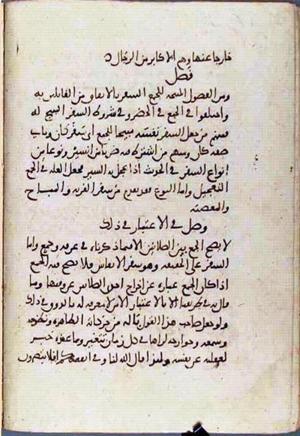
خارجا عنها، وهم الأكابر من الرجال.

فصل

ومن الفصول المبيحة للجمع السفر، بالاتفاق من القائلين به، واختلفوا في الجمع في الحضر، وفي شروط السفر المبيح له، فمنهم من جعل السفر نفسه مبيحا للجمع، أي سفر كان، وبأي صفة كان.

ومنهم من اشترط فيه ضربا من السير، ونوعا من أنواع السفر، في الحديث: «إذا عجل به السير»، فجعل العلة في الجمع التعجيل، وأما النوع فقد تقدم من سفر القربة والمباح والمعصية.

وصل في الاعتبار في ذٰلك

لا يصح الجمع بين الصلاتين إلا فيما ذكرناه في عرفة وجمع، وأما السفر على الحقيقة، وهو سفر الأنفاس، فلا يصح فيه الجمع، إذا كان الجمع عبارة عن إخراج إحدى الصلاتين عن وقتها، وما قال به في طريقنا، بالاعتبار، إلا من لا معرفة له بالذوق في ذٰلك.

ولو جعل صاحب هٰذا القول باله من حركاته الظاهرة ونظره وسمعه وجوارحه، لرآها في كل زمان تتغير، وما عنده خبر، لغفلته عن نفسه، ولهٰذا قال الله لنا: ﴿وفي أَنْفُسِكُمْ أَ فَلا تُبْصِرُونَ﴾ [الذاريات: ٢١].
Anglais

while standing outside them. Such people are the great among men.

Section

One of the circumstances that permit combining is travel, by agreement among those who permit combining. They disagree about combining when resident and about the conditions under which travel permits it. Some make travel itself a ground for combining, whatever the kind and manner of travel.

Others stipulate a particular manner of journeying and a particular kind of travel. In the hadith, “when his journey was urgent,” they make urgency the reason for combining. As for the kind of travel, we have already discussed travel for the sake of drawing near to God, permissible travel, and travel involving disobedience.

Continuation on the Inward Application of This

Combining two prayers is valid only in what we have described at ʿArafah and Jamʿ. As for travel in the true sense, which is the journey of the breaths, combining does not apply to it if combining means putting one of the two prayers outside its time. In the inward application on our path, only someone who has no experiential knowledge of this holds otherwise.

If the one who holds this view were to pay attention to his outward movements, his sight, his hearing, and his bodily members, he would see them changing at every instant. He has no awareness of this because he is heedless of himself. Hence God said to us, “And in yourselves. Do you not see?” [al-Dhariyat 51:21].

Notes

Translator’s note TN1961-1: The “journey of the breaths” is the servant’s passage through changing conditions from one breath to the next, even when outwardly resident.

Image du manuscritVolume du manuscrit 7 · Page 67

Les textes arabe et anglais sont reliés par le même identifiant de page de Konya. La répartition est approximative ; vérifiez le manuscrit.

Référence de la source du Caire

Ibn al-Arabi, The Meccan Revelations — Volume du manuscrit 7 · Page 67 — https://www.futmak.com/francais/konya/pages.php?id=1961&text=both