
Futmak · الفتوحات المكية · Meccan Revelations

Les Futûhât al-Makkiyya

Volume du manuscrit 7 · Page 60

Manuscrit de Konya

Ouvrir la source arabeOuvrir la traduction anglaise

Arabe

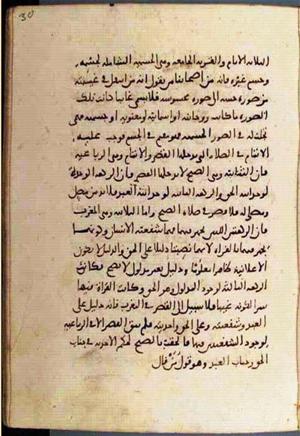
الثلاثة الأيام[30].

والقرية الجامعة، وهي الجسمية الشاملة لجسمه وجسم غيره، فإنه من أصحابنا من يقول إنه من انتقل في غيبته من صورة حسه إلى صورة محسوسه فلا يسمى غائبا، كانت تلك الصورة ما كانت، روحانية، أو أسمائية، أو معنوية، أو جسمية، مهما تجلت له في الصور الجسمية، فهو مقيم في الجسم، فوجب عليه الإتمام في الصلاة التي يدخلها القصر والإتمام، وهي الرباعية، فإن الثنائية، وهي الصبح لا يدخلها القصر، فإن الركعة الواحدة لوحدانية الحق، والركعة الثانية لوحدانية العبد، فلا بد من مصل ومصلى له، فلا قصر في صلاة الصبح.

(عدد الركعات ودلالة الشفع والوتر)

وأما الثلاثية، وهي المغرب فإن الركعتين اللتين يجهر فيهما، فهما شفعية الإنسان وكونهما يجهر فيهما بالقراءة، لأنهما نصبتا دليلا على الحق، والدليل لا يكون إلا علانية ظاهرا معلوما، ودليل بغير مدلول لا يصح، فكانت الركعة الثالثة لوجود المدلول، وهو الحق، وكانت القراءة فيها سرا، لكونه (سبحانه) غيبا، فلا سبيل إلى القصر في المغرب، فإنه دليل على العبد وشفعيته، وعلى الحق وأحديته.

فلم يبق القصر إلا في الرباعية، لوجود الشفعيتين فيها، فألحقت بالصبح لحكم الأحدية في جناب الحق[31] وجناب العبد، وهو قول من قال:

Notes

[30]

(وردت «الثلاثة الأيام» هنا، مع أن الفصل المتقدم في بدء القصر ذكر «ثلاثة أميال»؛ أُبقي لفظ الملف ونُبّه إلى موضع المقابلة.)

[31]

(صُححت «الحق» بمقابلة الطبعة الأحدث، في مقابلة أحدية الحق وأحدية العبد.)
Anglais

three days[30].

The large settlement is corporeality, which embraces both its body and another’s body. Some of our companions say that someone who, in his absence, passes from the form of his sense perception to the form of what he perceives is not called absent, whatever that form may be, whether spiritual, pertaining to the names, intelligible, or corporeal. Whenever it discloses itself to him in corporeal forms, he remains a resident in the body and is required to perform in full the prayer that admits both shortening and full performance, namely the four-unit prayer. Shortening does not apply to the two-unit prayer, the dawn prayer. One unit is for the oneness of the Real and the second for the oneness of the servant. There must be one who prays and One to whom he prays. Thus there is no shortening in the dawn prayer.

(The Number of Units and the Significance of Pair and Odd)

As for the three-unit sunset prayer, the two units in which one recites aloud are the human being’s pairedness. The recitation is aloud in them because they were set up as a proof pointing to the Real, and a proof must be public, manifest, and known. A proof without something it points to is invalid. The third unit is for the existence of what the proof points to, which is the Real. The recitation in it is quiet because He, glory be to Him, is unseen. Thus there is no way to shorten the sunset prayer, for it points to the servant and his pairedness, and to the Real and His unity.

Shortening thus remains only in the four-unit prayer, because it has two pairs. It is assimilated to the dawn prayer in accordance with the unity belonging to the Real[31] and to the servant. This is what the poet expressed:

Notes

[30]

(“Three days” appears here, although the preceding section on the point at which shortening begins mentioned “three miles.” The wording of the file has been retained and the corresponding passage indicated.)

[31]

(The text was corrected to “the Real” by comparison with the newer edition, in the pairing of the unity of the Real and the unity of the servant.)

Image du manuscritVolume du manuscrit 7 · Page 60

Les textes arabe et anglais sont reliés par le même identifiant de page de Konya. La répartition est approximative ; vérifiez le manuscrit.

Référence de la source du Caire

Ibn al-Arabi, The Meccan Revelations — Volume du manuscrit 7 · Page 60 — https://www.futmak.com/francais/konya/pages.php?id=1954&text=both