
Futmak · الفتوحات المكية · Meccan Revelations

Les Futûhât al-Makkiyya

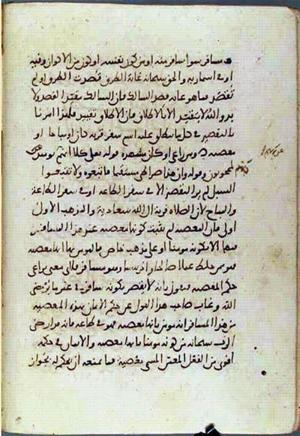
Volume du manuscrit 7 · Page 57

Manuscrit de Konya

Ouvrir la source arabeOuvrir la traduction anglaise

Arabe

مسافر، سواء سافر منه، أو من كون نفسه، أو كون من الأكوان، و(سواء سافر) فيه أو في أسماء ربه.

(غاية الطريق وقصد السالك)

والحق سبحانه (هو) غاية الطرق، قصدت الطرق، أو لم تقصد، فما هو غاية قصد السالك، فإن السالك مقيد القصد، ولا بد، والله لا يتقيد إلا بالإطلاق، فإن الإطلاق تقييد، فلهٰذا أمرنا بالتقصير في كل ما ينطلق عليه اسم سفر، قربة كان، أو مباحا، أو معصية.

ومن راعى أو كان مشهده قوله تعالى: ﴿كَلَّا إِنَّهُمْ عَنْ رَبِّهِمْ يَوْمَئِذٍ لَمَحْجُوبُونَ﴾ [المطففين: ١٥]، وقوله: ﴿وأَنَّ هٰذا صِراطِي مُسْتَقِيماً فَاتَّبِعُوهُ ولا تَتَّبِعُوا السُّبُلَ﴾ [الأنعام: ١٥٣]، لم ير التقصير إلا في سفر الطاعة، أو في سفر الطاعة والمباح، لأن الصلاة قربة إلى الله سعادية.

(حكم الإيمان مع وقوع المعصية)

والمذهب الأول أولى، فإن المعصية لم يثبت كونها معصية عند هٰذا المسافر فيها، إلا بكونه مؤمنا، أو على مذهب خاص بالمؤمن بها أنها معصية، فهو ممن خلط ﴿عَمَلًا صالِحاً وآخَرَ سَيِّئاً﴾، وهو مسافر، فلأي معنى نراعي حكم المعصية، فنقول بأنه لا يقصر بكونه سافر في غير ما يرضى الله؟

وغاب صاحب هٰذا القول عن حكم الايمان بهذه المعصية من هٰذا المسافر، أنه مؤمن بأنها معصية[29]، فهو في طاعة، فإنه قد أرضى الرب سبحانه من كونه مؤمنا بأنها معصية، والايمان في حكمه أقوى من الفعل المعين المسمى معصية، فما يمنعه إن يحكم له بجواز

Notes

[29]

(التفريق في هذا الاستدلال بين وقوع الفعل المخالف وبين إيمان الفاعل بأنه مخالفة؛ ولا يسقط المؤلف وصف المعصية عن الفعل.)
Anglais

traveler, whether he travels from Him, from his own engendered being, or from another engendered being, and whether he travels in Him or in the names of his Lord.

(The Destination of the Path and the Wayfarer’s Intention)

The Real, glory be to Him, is the destination of the paths, whether they are sought or unsought. He is beyond being the end intended by the wayfarer, for the wayfarer’s intention is necessarily delimited. God is delimited only by being unqualified, since being unqualified is itself a delimitation. This is why we have been commanded to shorten in whatever falls under the name “travel,” whether an act of drawing near, a permitted act, or a transgression.

Whoever takes into account, or whose witnessing follows, the words of the Most High, “No indeed, on that day they will be veiled from their Lord” [al-Mutaffifin 83:15], and “This is My straight path, so follow it and do not follow the other ways” [al-Anʿam 6:153], holds that one shortens only on a journey in obedience, or on a journey in obedience or for a permitted purpose, since prayer is an act of drawing near to God that leads to felicity.

(The Bearing of Faith When a Transgression Occurs)

The former position is preferable. In the eyes of the traveler who commits the transgression, its being a transgression is established only by his being a believer, or by a particular position under which he believes that it is a transgression. He is among those who mixed “a righteous deed with another, an evil deed,” and he is traveling. For what reason, then, should we take account of the ruling on the transgression and say he may not shorten because he traveled for something that does not please God?

The holder of this view has overlooked the bearing of this traveler’s faith regarding the transgression. He believes that it is a transgression[29], so he is engaged in obedience. He has pleased the Lord, glory be to Him, insofar as he believes that it is a transgression, and faith has a stronger bearing than the particular act called a transgression. What prevents him from ruling that it is permissible for the traveler

Notes

[29]

(This argument distinguishes the commission of the wrongful act from the doer’s belief that it is wrongful. The author retains the designation of the act as a transgression.)

Image du manuscritVolume du manuscrit 7 · Page 57

Les textes arabe et anglais sont reliés par le même identifiant de page de Konya. La répartition est approximative ; vérifiez le manuscrit.

Référence de la source du Caire

Ibn al-Arabi, The Meccan Revelations — Volume du manuscrit 7 · Page 57 — https://www.futmak.com/francais/konya/pages.php?id=1951&text=both