
Futmak · الفتوحات المكية · Meccan Revelations

Les Futûhât al-Makkiyya

Volume du manuscrit 7 · Page 15

Manuscrit de Konya

Ouvrir la source arabeOuvrir la traduction anglaise

Arabe

أما الواحد مع الإمام فهو حظ من يعرف أحدية الحق من أحدية نفسه، فيتخذ أحدية نفسه على أحدية ربه دليلا قال الشاعر:

و في كل شيء له آية تدل على أنه واحد.

وآية كل شيء عنده أحديته، إذ كان كل موجود لا بد أن يمتاز عن غيره بأحدية تخصه لا تكون لغيره، وتلك الأحدية هي على الحقيقة حقيقة أنيته وهويته، فيعلم من ذٰلك أن ربه على خصوص وصف في هويته لا يمكن أن يكون ذٰلك لسواه.

وأما من قال اثنان فهو الذي يعرف توحيده من النظر في شفعيته فيرى كل ما سوى الحق لا يصح له الانفراد بنفسه، وإنه مفتقر إلى غيره، فهو مركب من عينه ومن اتصافه بالوجود المستفاد الذي لم يكن له من حيث عينه.

(الفردية وتركيب الدليل)

وأما من قال بالثلاثة، وهو أول الأفراد فهو الذي يرى أن المقدمتين لا تنتج إلا برابط، فهي أربعة في الصورة، وثلاثة في المعنى[9]، فيرى أنه ما عرف الحق إلا من معرفته بالثلاثة، فاستدل بالفرد على الواحد، وهو أقرب في النسبة من الاستدلال بالشفع على الأحدية.

(الميقات والإخلاص)

Notes

[9]

(تشتمل المقدمتان على أربعة مواضع للألفاظ، لكن الحد الرابط يتكرر فيهما؛ فيكون عدد الحدود من حيث المعنى ثلاثة.)
Anglais

As for one person with the imam, that is the share of one who knows the oneness of the Real from the oneness of himself, taking his own oneness as a sign of his Lord’s oneness. As the poet says,

In everything He has a sign that shows that He is one.

The sign in each thing, for this person, is its oneness. Every existent thing must be distinct from others through a oneness peculiar to it that no other thing has. That oneness is truly the reality of its thatness and its identity. From this he knows that his Lord is distinguished by a description peculiar to His identity that can belong to no other.

The one who says two knows His oneness from considering the paired constitution of created things. He sees that everything besides the Real cannot subsist alone by itself and is in need of another. It is composed of its own entity and its possession of existence that it received and that did not belong to it by virtue of its own entity.

(Oddness and the Composition of a Proof)

The one who says three, the first of the odd numbers, holds that two premises yield a conclusion only by means of a connecting term. They are four in form and three in meaning[9]. Thus he sees that he knew the Real only through his knowledge of the three. He infers the One from the odd, which is closer in correspondence than inferring oneness from the even.

(The Appointed Term and Sincerity)

Notes

[9]

(The two premises have four places for words, but the connecting term recurs in both. The number of terms in meaning is therefore three.)

Translator’s note TN1909-1: “Thatness” renders anniyyah, here the fact of being that particular entity. Shafʿ and fard distinguish the even or paired from the odd. In the example from logic, the repeated middle term reduces four term positions to three distinct terms.

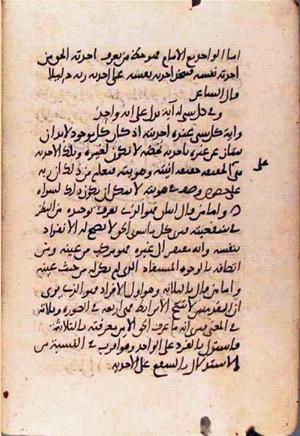
Image du manuscritVolume du manuscrit 7 · Page 15

Les textes arabe et anglais sont reliés par le même identifiant de page de Konya. La répartition est approximative ; vérifiez le manuscrit.

Référence de la source du Caire

Ibn al-Arabi, The Meccan Revelations — Volume du manuscrit 7 · Page 15 — https://www.futmak.com/francais/konya/pages.php?id=1909&text=both