
Futmak · الفتوحات المكية · Meccan Revelations

Les Futûhât al-Makkiyya

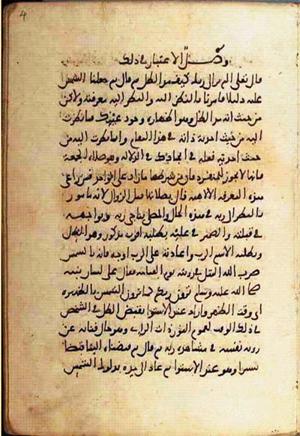
Volume du manuscrit 7 · Page 8

Manuscrit de Konya

Ouvrir la source arabeOuvrir la traduction anglaise

Arabe

وصل الاعتبار في ذٰلك

قال تعالى: ﴿أَ لَمْ تَرَ إِلى رَبِّكَ كَيْفَ مَدَّ الظِّلَّ﴾ [الفرقان: ٤٥]، ثم قال: ﴿ثُمَّ جَعَلْنَا الشَّمْسَ عَلَيْهِ دَلِيلًا﴾، فأمرنا بالنظر إليه، والنظر إليه معرفته، ولكن من حيث إنه مد الظل، وهو إظهاره وجود عينك، فما نظرت إليه من حيث أحدية ذاته في هٰذا المقام، وإنما نظرت إليه من حيث أحدية فعله في إيجادك في الدلالة، وهو صلاة الجمعة، فإنها لا تجوز للمنفرد؛ فإن من شرطها ما زاد على الواحد.

فمن راعى هذه المعرفة الإلهية قال بصلاتها قبل الزوال، لأنه مأمور بالنظر إلى ربه في هذه الحال، والمصلي يناجي ربه ويواجهه في قبلته.

(عود الضمير ودلالة الشمس والظل)

والضمير في عليه[5] يطلبه أقرب مذكور، وهو الظل، ويطلبه الاسم الرب، وإعادته على الرب أوجه فإنه بالشمس ضرب الله المثل في رؤيته يوم القيامة، فقال على لسان نبيه صلى الله عليه وسلم: «ترون ربكم كما ترون الشمس بالظهيرة»، أي وقت الظهر، فأراد عند الاستواء بقبض الظل في الشخص[6] في ذٰلك الوقت لعموم النور ذات الرائي، وهو حال فنائه عن رؤية نفسه في مشاهدة ربه.

ثم قال: ﴿ثُمَّ قَبَضْناهُ إِلَيْنا قَبْضاً يَسِيراً﴾ [الفرقان: ٤٦]، وهو عند الاستواء، ثم عاد إلى مده بدلوك الشمس،

Notes

[5]

(يبحث المؤلف عود الضمير في قوله «عليه»: هل يعود على الظل أم على الرب؛ ثم يبني على الوجهين اعتباره لمد الظل وانقباضه.)

[6]

(يربط المؤلف انقباض الظل في هذا الاعتبار بفناء نظر العبد إلى نفسه عند المشاهدة؛ والمقصود هنا شرح المناسبة التي أقامها في النص.)
Anglais

Continuation on Its Inward Application

He, exalted is He, says, “Have you not looked toward your Lord, how He stretched out the shadow?” [al-Furqan 25:45]. Then He says, “Then We made the sun a guide to it.” He thus commanded us to look toward Him, and looking toward Him is knowing Him, but in respect of His stretching out the shadow, which is His making manifest the existence of your entity. In this station you have considered Him with respect to the oneness of His act in bringing you into existence, as Friday prayer indicates, without considering Him with respect to the oneness of His Essence. Friday prayer is not permitted for a person alone, since it requires more than one.

The one who takes this knowledge of God into account holds that it is performed before the sun’s decline, because he is commanded to look toward his Lord in this state. The person at prayer converses intimately with his Lord and faces Him in his direction of prayer.

(The Pronoun’s Referent and the Significance of the Sun and Shadow)

The pronoun in ʿalayhi, “to it”[5], can be referred to the nearest thing mentioned, the shadow, or to the name “Lord.” It is more apt to refer it to the Lord, for God used the sun as a likeness for seeing Him on the Day of Resurrection. He said on the tongue of His Prophet, may God bless him and grant him peace, “You will see your Lord as you see the sun at noon,” meaning the time of noon prayer. He meant that at the meridian the shadow is drawn into the person[6], because the light pervades the very being of the one who sees. This is the state of passing away from seeing oneself in witnessing one’s Lord.

Then He says, “Then We drew it toward Us, drawing it in gently” [al-Furqan 25:46]. This occurs at the meridian. Then He again extends it when the sun declines,

Notes

[5]

(The author examines the referent of the pronoun in ʿalayhi, whether it goes back to the shadow or to the Lord. He then bases his inward application of the extension and withdrawal of the shadow on the two readings.)

[6]

(In this inward application the author connects the withdrawal of the shadow with the servant’s ceasing to look at himself when witnessing. The aim is to explain the correspondence he establishes in the text.)

Translator’s note TN1902-1: The Arabic preposition and pronoun ʿalayhi allow “to it” or “to Him.” Taking the referent to be the Lord makes the sun a sign for knowing or seeing the Lord. Taking the shadow as referent makes the sun a sign of the shadow’s extension. The shadow image is then applied to seeing oneself pass out of awareness in witnessing God.

Image du manuscritVolume du manuscrit 7 · Page 8

Les textes arabe et anglais sont reliés par le même identifiant de page de Konya. La répartition est approximative ; vérifiez le manuscrit.

Référence de la source du Caire

Ibn al-Arabi, The Meccan Revelations — Volume du manuscrit 7 · Page 8 — https://www.futmak.com/francais/konya/pages.php?id=1902&text=both