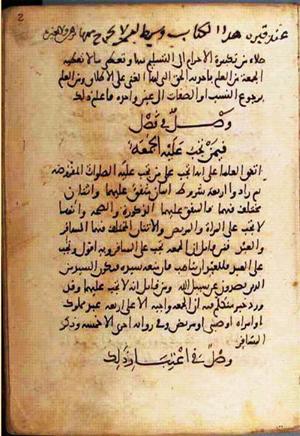
a prayer, from the opening takbīr to the closing greeting of peace. It also affords what Friday prayer does not, knowledge of the oneness of the Real in His absolute independence and knowledge of how the relations or attributes go back to a single entity. Know this.
Continuation on Those for Whom Friday Prayer Is Obligatory
The scholars agree that it is obligatory for those for whom the prescribed prayers are obligatory. They add four conditions, two agreed upon and two disputed. The agreed conditions are being male and being in good health, so it is not obligatory for a woman or a sick person.
The disputed cases are the traveler and the enslaved person. Some say Friday prayer is obligatory for the traveler, which is my view, and that it is obligatory for the enslaved person. He may prepare for it. If his master prevents him, the master is among “those who bar others from God’s way” [al-Hajj 22:25]. Others say it is not obligatory for either of them.
A report whose reliability is disputed states, “Friday prayer is obligatory except for four, an enslaved person, a woman, a child, or a sick person.” Another version says, “except for five,” and mentions the traveler.
Continuation on Its Inward Application
Notes
Translator’s note TN1898-1: An individual obligation (farḍ ʿayn) falls on each person subject to it. A communal obligation (farḍ kifāyah) can be discharged for the community when enough of its members perform it.