
Futmak · الفتوحات المكية · Meccan Revelations

Les Futûhât al-Makkiyya

Volume du manuscrit 7 · Page 3

Manuscrit de Konya

Ouvrir la source arabeOuvrir la traduction anglaise

Arabe

بِسْمِ اللهِ الرَّحْمٰنِ الرَّحِيمِ

وصل في فصول الجمعة

فصل بل وصل في الخلاف في وجوبها

اختلف العلماء في وجوب الجمعة، فمن قائل إنها من فروض الأعيان؛ ومن قائل إنها من فروض الكفاية؛ ومن قائل إنها سنة.

وصل في الاعتبار

(الجمعة وأحدية الكثرة)

ليس لهذه الصلاة قدم في توحيد الذات، ولا نتيجة في حال العالم بها العامل، لكن لها العلم بأحدية الكثرة[1]، وكذٰلك من يرى أن الذات اقتضت لنفسها وجود العالم؛ فلا ينتج هٰذا العلم ما يرد من الله على قلب العبد ولا في تجليه في هذه الصلاة، وذٰلك أنها مبنية في وجودها وحقيقتها على الزائد على الواحد.

فهي من حضرة الأسماء الإلهية، فإن وقوعها لا يصح من المنفرد، بخلاف الصلوات كلها فإنها تصح من المنفرد.

فكل صلاة ما عدا الجمعة تعطي ما تعطي الجمعة، من حيث ما هي

Notes

[1]

(أحدية الكثرة هنا وحدةٌ تُعقل مع تعدد النسب والأسماء، ويقابلها المؤلف بأحدية الذات التي لا تُؤخذ من إضافة إلى العالم.)
Anglais

In the name of God, the All-Merciful, the Ever-Merciful.

Continuation on the Sections concerning Friday Prayer

Section, or Rather Continuation, on the Disagreement over Its Obligation

The scholars disagree about whether Friday prayer is obligatory. Some hold that it is an individual obligation. Others hold that it is a communal obligation. Others hold that it is a Sunna.

Continuation on the Inward Application

(Friday Prayer and the Unity of Multiplicity)

This prayer has no foothold in the affirmation of the oneness of the Essence, nor does it bear fruit in the state of the person who knows that oneness and acts in accordance with it. It affords knowledge of the unity of multiplicity[1]. The same applies to someone who holds that the Essence in itself required the existence of the world. This knowledge does not yield what comes from God upon the servant’s heart or what is received in His self-disclosure in this prayer, for in its existence and reality this prayer is founded on more than one.

It belongs to the presence of the divine names. It cannot validly be performed by a person alone, whereas all other prayers can validly be performed by a person alone.

Thus each prayer apart from Friday prayer affords what Friday prayer affords insofar as it is

Notes

[1]

(Here the unity of multiplicity is a unity intelligible alongside a plurality of relations and names. The author contrasts it with the oneness of the Essence, which is not derived from a relation to the world.)

Translator’s note TN1897-1: “Unity of multiplicity” renders aḥadiyyat al-kathrah, the unity disclosed through multiple relations and divine names. The Arabic clause about what comes upon the heart is compressed. The translation reads it as distinguishing the kind of knowledge described here from what the servant receives in his state.

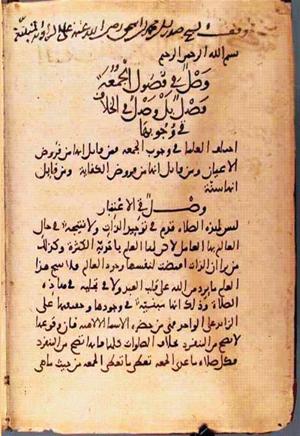
Image du manuscritVolume du manuscrit 7 · Page 3

Les textes arabe et anglais sont reliés par le même identifiant de page de Konya. La répartition est approximative ; vérifiez le manuscrit.

Référence de la source du Caire

Ibn al-Arabi, The Meccan Revelations — Volume du manuscrit 7 · Page 3 — https://www.futmak.com/francais/konya/pages.php?id=1897&text=both