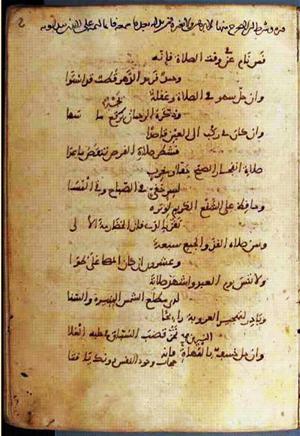
One who sleeps through the time for prayer
is alone and unique in the age, a Pole who has reached equilibrium.
If a lapse or heedlessness befalls him in prayer
and the All-Merciful reminds him, He makes good what he forgot.
If he travels in a company bound for the very Source,
he shortens the obligatory prayer by half, with the exception
of the prayer at the breaking of dawn and the sunset prayer,
because of a hidden secret in morning and evening.
Keep the noble even-numbered prayer, if only you could see it,
and you will attain what the first great ones attained.
Between praying alone and praying in congregation lie seven
and twenty degrees, if the one praying goes hungry.
Do not forget the day of the festival. Attend its prayer
when the luminous, radiant sun rises.
Hasten out to Friday prayer at midday,
and you will seize the prize in the race for the heights.
If an eclipse overtakes the shining moon,
young friend, your own existence stands as a veil before you.
Notes
Translator’s note TN1576-1: “The very Source” renders al-ʿayn, which can also mean an essence or a spring. The poem superimposes a spiritual destination on the traveler’s practice of shortening prayer.
Translator’s note TN1576-2: The source gives twenty-seven as seven and twenty, with the number divided between the two half-lines. The closing expression ʿalā ṭawā suggests going without food.