Les Futûhât al-Makkiyya

Volume du manuscrit 4 · Page 267

Manuscrit de Konya

Ouvrir la source arabeOuvrir la traduction anglaise

Arabe

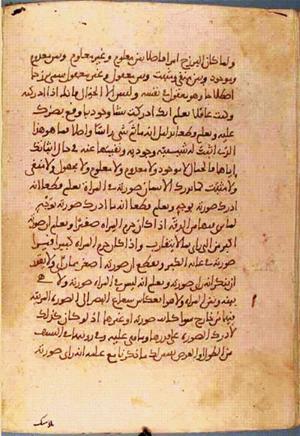
ولما كان البرزخ أمرا فاصلا بين معلوم وغير معلوم، وبين معدوم وموجود، وبين منفي ومثبت، وبين معقول وغير معقول، سمي برزخا اصطلاحا؛ وهو معقول في نفسه وليس إلا الخيال. فإنك إذا أدركته وكنت عاقلا، تعلم أنك أدركت شيئا وجوديا وقع بصرك عليه، وتعلم قطعا بدليل أنه ما ثم شيء رأسا وأصلا.

فما هو هٰذا الذي أثبت له شيئية وجودية ونفيتها عنه في حال إثباتك إياها؟ فالخيال لا موجود ولا معدوم[52] ولا معلوم ولا مجهول ولا منفي ولا مثبت.

(مثال الصورة في المرآة)

كما يدرك الإنسان صورته في المرآة، يعلم قطعا أنه أدرك صورته بوجه، ويعلم قطعا أنه ما أدرك صورته بوجه؛ لما يرى فيها من الدقة إذا كان جرم المرآة صغيرا، ويعلم أن صورته أكبر من التي رأى بما لا يتقارب. وإذا كان جرم المرآة كبيرا فيرى صورته في غاية الكبر، ويقطع أن صورته أصغر مما رأى.

ولا يقدر أن ينكر أنه رأى صورته، ويعلم أنه ليس في المرآة صورته ولا هي بينه وبين المرآة، ولا هو انعكاس شعاع البصر إلى الصورة المرئية فيها من خارج، سواء كانت صورته أو غيرها؛ إذ لو كان كذٰلك لأدرك الصورة على قدرها وما هي عليه. وفي رؤيتها في السيف من الطول أو العرض يتبين لك ما ذكرنا، مع علمه أنه رأى صورته

Notes

[52]

(يعرض المؤلف الخيال بوصفه برزخا يجمع جهتي الإثبات والنفي، ثم يقرب هذا المعنى بصورة المرآة؛ فلا يقصد بهذه الأوصاف حكما منفردا عن المقابلات التالية.)
Anglais

Because the barzakh separates known and unknown, nonexistent and existent, negated and affirmed, and intelligible and unintelligible, it is technically called a barzakh. It is intelligible in itself and is none other than imagination. If you perceive it and have reason, you know that you have perceived something existent on which your sight fell. You also know with certainty from a proof that there is absolutely nothing there.

What then is this thing to which you ascribe existent thingness, even as you deny it that very thingness? Imagination is neither existent nor nonexistent,[52] neither known nor unknown, and neither negated nor affirmed.

(The Example of the Form in the Mirror)

It is like a person perceiving his form in a mirror. He knows with certainty that in one respect he has perceived his form, and he knows with certainty that in another respect he has not. When the body of the mirror is small, he sees his form diminished and knows that his own form is incomparably larger than the one he saw. When the body of the mirror is large, he sees his form greatly enlarged and is certain that his form is smaller than what he saw.

He cannot deny that he saw his form. Yet he knows that his form is neither in the mirror nor between himself and the mirror. Nor is this a reflection of a ray of sight to the form seen there from outside, whether that form is his own or another. Were it so, he would perceive the form at its own size and as it is. Seeing it lengthwise or crosswise in a sword makes clear what we have said, even as he knows that he saw his form

Notes

[52]

(The author presents imagination as a barzakh that brings together the aspects of affirmation and negation, then brings the point closer with the mirror image. The descriptions are to be read in conjunction with the contrasts that follow.)

Image du manuscritVolume du manuscrit 4 · Page 267

Les textes arabe et anglais sont reliés par le même identifiant de page de Konya. La répartition est approximative ; vérifiez le manuscrit.

Référence de la source du Caire

Ibn al-Arabi, The Meccan Revelations — Volume du manuscrit 4 · Page 267 — https://www.futmak.com/francais/konya/pages.php?id=1225&text=both