Les Futûhât al-Makkiyya

Volume du manuscrit 4 · Page 266

Manuscrit de Konya

Ouvrir la source arabeOuvrir la traduction anglaise

Arabe

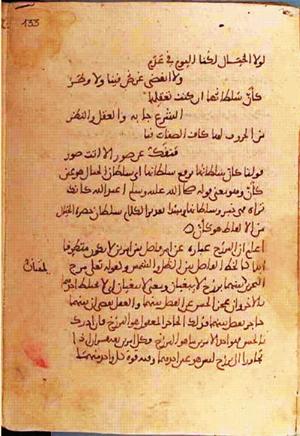
لو لا الخيال لكنا اليوم في عدم

و لا انقضى غرض فينا ولا وطر

كأنّ سلطانها إن كنت تعقلها

الشرع جاء به والعقل والنظر

من الحروف لها كاف الصفات فما

تنفك عن صور إلا أتت صور

(بيان اللفظ في القصيدة)

قولنا: «كأنّ سلطانها»، برفع سلطانها، أي سلطان الخيال هو عين «كأنّ»، وهو معنى قوله صلى الله عليه وسلم: «اعبد الله كأنك تراه». فهي خبر وسلطانها مبتدأ؛[51] تقدير الكلام: سلطان حضرة الخيال من الألفاظ هو «كأنّ».

(البرزخ والحاجز بين أمرين)

اعلم أن البرزخ عبارة عن أمر فاصل بين أمرين، لا يكون متطرفا أبدا؛ كالخط الفاصل بين الظل والشمس، وكقوله تعالى: ﴿مَرَجَ الْبَحْرَيْنِ يَلْتَقِيانِ بَيْنَهُما بَرْزَخٌ لا يَبْغِيانِ﴾ [الرحمن: ١٩، ٢٠]. ومعنى ﴿لا يَبْغِيانِ﴾ أي لا يختلط أحدهما بالآخر، وإن عجز الحس عن الفصل بينهما، والعقل يقضي أن بينهما حاجزا يفصل بينهما.

فذٰلك الحاجز المعقول هو البرزخ، فإن أدرك بالحس فهو أحد الأمرين ما هو البرزخ. وكل أمرين يفتقران إذا تجاورا إلى برزخ ليس هو عين أحدهما، وفيه قوة كل واحد منهما.

Notes

[51]

(ضُبطت أداة التشبيه «كأنّ»، وصُحّحت «خير» إلى «خبر»، وفق الطبعة الأحدث؛ والشرح في تركيب المبتدأ والخبر.)
Anglais

Were it not for imagination, we would today be in nonexistence,

and no aim or desire of ours would have been fulfilled.

“As though” is its sovereign, if you understand it.

Revealed Law brought it, as did reason and reflection.

Among the letters it has the kāf of attributes. It never

parts with forms before other forms arrive.

(Explaining the Wording of the Poem)

In the line “Its sovereign is ‘as though,’” “its sovereign” is in the nominative. That is, the sovereign of imagination is the very expression kaʾanna, “as though.” This is the sense of his words, may God bless him and grant him peace, “Worship God as though you see Him.” “As though” is the predicate and “its sovereign” is the subject.[51] The order of the words in prose would be “The sovereign among words of the presence of imagination is ‘as though.’”

(The Intermediate Realm and the Barrier between Two Things)

Know that barzakh means something separating two things and never lying at either extremity. It is like the line that separates shadow and sunlight, or as He, exalted is He, says, “He let the two seas meet. Between them is a barrier that they do not overrun” [al-Rahman 55:19–20]. “They do not overrun” means that neither mixes with the other. Even if sense cannot distinguish them, reason judges that a barrier separates them.

That intelligible barrier is the barzakh. If it is perceived by sense, it is one of the two things rather than the barzakh. Whenever two things adjoin, they require a barzakh identical with neither, which has the power of each of them.

Notes

[51]

(The particle of comparison was vocalized as kaʾanna, and khayr, “good,” was corrected to khabar, “predicate,” in accordance with the newer edition. The explanation concerns the construction of subject and predicate.)

Translator’s note TN1224-1: Ibn al-Arabi treats “as though” as an expression in its own right, the predicate placed before “its sovereign.” The letter kāf in the poem also suggests the “as” of resemblance. Barzakh is used first for a barrier or isthmus, and then for the intermediate realm in which the author situates imaginal perception.

Image du manuscritVolume du manuscrit 4 · Page 266

Les textes arabe et anglais sont reliés par le même identifiant de page de Konya. La répartition est approximative ; vérifiez le manuscrit.

Référence de la source du Caire

Ibn al-Arabi, The Meccan Revelations — Volume du manuscrit 4 · Page 266 — https://www.futmak.com/francais/konya/pages.php?id=1224&text=both