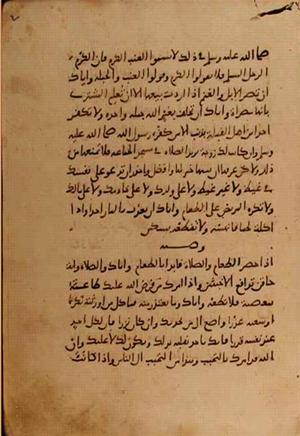
concerning this: “Do not call grapes al-karm, for al-karm is the Muslim man. Do not say al-karm; say grapes and al-ḥabala.”
Beware of retaining the milk in the udders of camels and sheep when you wish to sell them, unless you inform the buyer that they have been treated in this way[1]. Beware altogether of swearing by anything other than God. Do not declare any of the people of the qibla an unbeliever on account of a sin, except someone whom the Messenger of God, God bless him and grant him peace, declared an unbeliever. If you have a wife who wishes to pray in the congregational mosque, do not prevent her from doing so; but inform her that her home is better and more excellent for her.
Beware of praying against yourself, whether in anger or otherwise, or against your child, servant, or property. Do not force a sick person to eat. Beware of tormenting anyone with fire. When you eat meat, bite it off rather than cutting it with a knife.
Counsel
When food and prayer are both ready, begin with the food. Beware of praying while holding back the urge to pass urine or stool. If someone whom God has made it obligatory for you to obey commands you to commit disobedience, do not obey him. Beware of what requires an apology: not everyone whom you have caused to resent you can be satisfied by your excuse.
Listen attentively to whoever speaks to you, even if he is of little account, for everyone has a measure of worth in his own eyes. Through this you win his heart, and he will be for you rather than against you. God has commanded you to cultivate affection, and this is a way of cultivating people’s affection.
If
Notes
[1]
(A muṣarrāt animal is one whose milk has been retained in its udder before sale to give the impression of abundant milk; the text therefore links the prohibition to informing the buyer.)
Translator’s note: Karm is a name for the grapevine involved in the report’s wordplay; the same Arabic root conveys generosity and nobility. Al-ḥabala also denotes the grapevine.