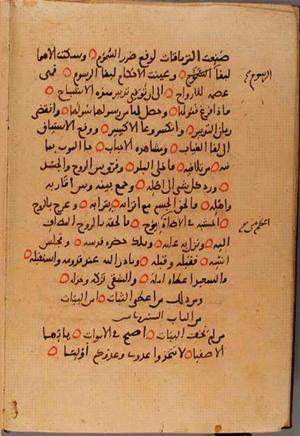
Antidotes were made to remove the harm of poisons, passions were stilled for poisons to remain[2], and rulings were specified so that traces might remain. They afford spirits infallibility until they complete the governance of these bodily shapes.
When their reception is exhausted, they obtain their request from their messenger, the time of governance ends, the elixir’s vessel breaks, and yearning arises to meet the absent and witness the beloveds, death comes with the making-good it contains. The city is emptied, spirit and body are separated, everything is returned to its root, and it is joined to its relations and family.
He joined the body to its peers through its dust, and caused the spirit, likened in radiance to Yuh, to ascend. He joined it to the Spirit ascribed to Him and brought it down upon Him. That is the Presence of His holiness and the gathering of His intimacy. He accepted it and kissed it[3], hastened toward it on its arrival, and welcomed it.
He gave the felicitous one his hope, while He left and abandoned the wretched.
And among these is: One Granted Firmness Is Safe from the Night Attack, from Chapter 260.
One who does not fear the night attack awakens among the dead.
O chosen ones, ﴿Do not take My enemy and your enemy as patrons﴾ [al-Mumtahana 60:1].
Notes
[2]
(‘Passions were stilled for poisons to remain’ has been established according to the newer edition, in place of the disturbed division in the earlier text.)
[3]
(The second verb, wa-qabbalahu, ‘and kissed him,’ has been marked with doubling according to the newer edition, distinguishing it from the preceding fa-qabilahu, ‘and accepted him.’)
Translator’s note: The clause about passions and poisons remains compressed; sumum can also mean a scorching wind, and the causal or purposive relation is uncertain. The pronouns around the spirit’s ascent, reception, and welcome do not uniquely fix every attachment.