Fütûhât-ı Mekkiyye

Yazma cildi 2 · Sayfa 5

Konya yazması

Arapça kaynağı açİngilizce çeviriyi aç

Arapça

‏‏

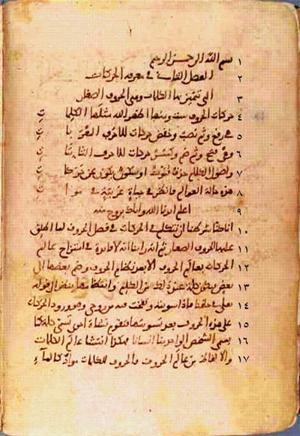
(تتمة الباب الثاني: في معرفة الحروف والحركات)

الفصل الثاني: في معرفة الحركات الَّتي تتميَّز بها الكلمات وهي الحروف الصغار

(قصيدة المطلع)

حَرَكَاتُ الحُرُوفِ سِتٌّ وَمِنْهَا

أَظْهَرَ اللهُ مِثْلَهَا الكَلِمَاتِ

هِيَ رَفْعٌ وَثُمَّ نَصْبٌ وَخَفْضٌ

حَرَكَاتٌ لِلأَحْرُفِ المُعْرَبَاتِ

وَهْيَ فَتْحٌ وَثُمَّ ضَمٌّ وَكَسْرٌ

حَرَكَاتٌ لِلأَحْرُفِ الثَّابِتَاتِ

وَأُصُولُ الكَلاَمِ حَذْفٌ فَمَوْتٌ

أَوْ سُكُونٌ يَكُونُ عَنْ حَرَكَاتِ

هٰذِهِ حَالَةُ العَوَالِمِ فَانْظُرْ

لِحَيَاةٍ غَرِيبَةٍ في مَوَاتِ

(امتزاج الحروف بالحركات)

اعلم، أيَّدنا الله وإيَّاك بروحٍ منه، إنَّا كنَّا شرَطْنا أن نتكلَّم في الحركات في فصلِ الحروف: لِمَ أُطلق عليها الحروف الصِّغار؟ ثم إنَّهُ رأينا أنَّهُ لا فائدة في امتزاج عالَمِ الحركات بعالَمِ الحروف إلاَّ بعد نظام الحروف وضمِّ بعضِها إلى بعضٍ فتُكوِّنَ كلمةً عند ذٰلك من الكَلِم.

(انتظام الحروف وتشكُّل الكَلِم)

وانتظامها يُنظر إلى قوله تعالى في خلقِنا (كما ورد في سورة الحجر [29]، وكذٰلك في سورة ص [72]): ﴿ فَإِذا سَوَّيْتُهُ ونَفَخْتُ فِيهِ من رُوحِي﴾ [الحجر: ٢٩]، وهو ورود الحركات على هٰذه الحروف بعد تسويتها فتقوم نشأة أخرى تسمَّى «كَلِمَة» كما يسمَّى الشَّخص الواحد منَّا إنساناً؛ فكهٰذا انتشأ عالَم الكلمات والألفاظ من عالَم الحروف.

(التَّشابه بين الحروف والأجسام)

فالحروف للكلمات موادٌّ كالماء
İngilizce

(Continuation of Chapter 2: On Knowing the Letters and Vowel Movements)

The Second Section: On Knowing the Vowel Movements by Which Words Are Distinguished, Which Are the Small Letters

(The Opening Poem)

The vowel movements of letters are six; from them

God has brought forth corresponding words.

They are the nominative, then the accusative and genitive:

Vowel movements of inflected letters.

They are also opening, then rounding and lowering:

Vowel movements of fixed letters.

The roots of speech are deletion, and thus death,

Or stillness arising from movements.

This is the condition of the worlds: behold

A strange life within lifeless things.

(The Mixing of Letters with Vowel Movements)

Know—may God strengthen us and you with a spirit from Him—that we had stipulated that we would discuss vowel movements in the section on letters: why are they called the small letters? Then we considered that there is no benefit in mixing the world of vowel movements with the world of letters until the letters have been ordered and joined to one another, so as to form one of the words.

(The Ordering of Letters and the Formation of Words)

Their ordering relates to His saying about our creation, as found in Surat al-Hijr [29] and likewise in Surat Sad [72]: “When I have fashioned him and breathed into him of My spirit” [Qur’an 15:29; 38:72]. This is the arrival of vowel movements upon these letters after they have been fashioned. Another formation then arises, called a “word,” just as a single individual among us is called a human being. In this way the world of words and utterances arose from the world of letters.

(The Resemblance between Letters and Bodies)

Letters are the materials of words, just as water—

Notlar

Translator’s note TN325-1: Harakah means both movement and a vowel sign or vowel sound. The first three terms, rafʿ, naṣb, and khafḍ, name grammatical inflections; the next three, fatḥ, ḍamm, and kasr, describe the corresponding a, u, and i vowel movements in fixed forms. Sukūn, translated “stillness,” also means the absence of a following vowel. The poem makes these grammatical terms part of its imagery of motion, life, and death.

Yazma görüntüsüYazma cildi 2 · Sayfa 5

Arapça ve İngilizce aynı Konya sayfa kimliğiyle bağlanır. Sayfa eşleştirmesi yaklaşıktır; doğrulamak için yazma görüntüsüne bakın.

Kahire kaynak referansı

Ibn al-Arabi, The Meccan Revelations — Yazma cildi 2 · Sayfa 5 — https://www.futmak.com/turkce/konya/pages.php?id=325&text=both