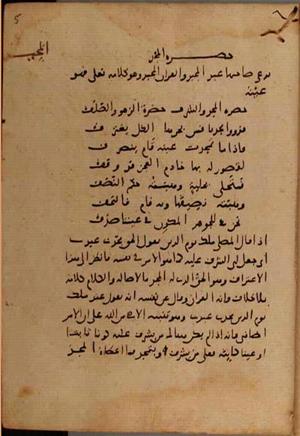
the Presence of Glory”
Its possessor is called the Servant of the Glorious. The Glorious Qur’an is His speech, Most High, and therefore His very entity. The Presence of Glory and Honor, the Presence of Exultation and Proud Display:
As for those endowed with our glory—from
her sea everyone draws.
When his entity becomes glorious,
he rises, turning away,
because of a shortfall he has there;
the servant of incapacity has stopped.
He adorned himself with an ornament
that granted him the ruling of half.
It granted him its covering;
through it he arose and wrapped himself.
We are, for the engendered jewel,
within our very entity, a shell.
When the one praying says, “King of the Day of Recompense” [al-Fatiha 1:4], the Real says, “My servant has glorified Me”: that is, he has granted Me honor above him, just as the affair is in itself. Consider this acknowledgment. He is the Real, to whom glory belongs originally, and the speech is unquestionably His speech, for it is the Qur’an.
He said of Himself that, at “Master of the Day of Recompense” [al-Fatiha 1:4], He says, “My servant has glorified Me.” This is a divine reminder from God that the affair is relational. If there is no one there over whom He has honor, whether a being in fixity or an entity in existence, over whom does He possess honor and become glorified? Nothing gave Him glory
Notlar
Translator’s note: Quṣūr is read as “shortfall”; “palaces” is also possible, and the attachment of “the servant of incapacity” is compressed. The jewel’s epithet may be read as “engendered,” mukawwan, or “engendering,” mukawwin.