
Futmak · الفتوحات المكية · Meccan Revelations

Fütûhât-ı Mekkiyye

Yazma cildi 32 · Sayfa 162

Konya yazması

Arapça kaynağı açİngilizce çeviriyi aç

Arapça

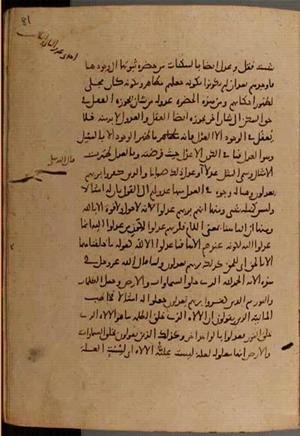
شئت فقل. وعدل أيضا بالممكنات من حضرة ثبوتها إلى وجودها، فأوجدهم بعد أن لم يكونوا بكونه جعلهم مظاهر وبكونه كان مجلى لظهور أحكامهم.

ومن هذه الحضرة عدوله من شأن يجوزه العقل في حق الممكن إلى شأن آخر يجوزه أيضا العقل. والعدول لا بد منه، فلا يعقل في الوجود إلا العدل، فإنه ما ظهر الوجود إلا بالميل وهو العدل. فما في الكون إلا عدل حيث فرضته.

(وجوه العدل والمماثلة)

وبالعدل ظهرت الأمثال، وسمي المثل عدلا. قال الله تعالى: ﴿أَوْ عَدْلُ ذٰلك صِياماً﴾ [المائدة: ٩٥]، و﴿الَّذِينَ كَفَرُوا بِرَبِّهِمْ يَعْدِلُونَ﴾ [الأنعام: ١]. وهنا له وجوه في العدل: منها عدولهم إلى القول بأن له أمثالا و﴿لَيْسَ كَمِثْلِهِ شَيْءٌ﴾ [الشورى: ١١]، ومنها إنهم بربهم عدلوا لأنه لا حول ولا قوة إلا بالله.

ومنها أن الباء هنا بمعنى اللام، فلربهم عدلوا، لكون من عدلوا إليه إنما عدلوا إليه لكونه عندهم إلها، فما عدلوا إلا لله. كقوله: ﴿ما خَلَقْناهُما إِلَّا بِالْحَقِّ﴾ [الدخان: ٣٩]، أي للحق، كذٰلك ﴿بِرَبِّهِمْ يَعْدِلُونَ﴾.

ولما قال الله عز وجل في هذه الآية: ﴿الْحَمْدُ لِلَّهِ الَّذِي خَلَقَ السَّماواتِ والْأَرْضَ وجَعَلَ الظُّلُماتِ والنُّورَ ثُمَّ الَّذِينَ كَفَرُوا بِرَبِّهِمْ يَعْدِلُونَ﴾ [الأنعام: ١]، جعلوا له أمثالا، فخاطب المانية الذين يقولون إن الإله الذي خلق الظلمة ما هو الإله الذي خلق النور، فعدلوا بالواحد آخر.

وكذٰلك الذين يقولون بخلق السماوات والأرض إنها معلولة لعلة ليست علته الإله، أي ليست العلة
İngilizce

you wish, say it. He also turned the possibles from the Presence of their fixity to their existence. He brought them into being after they had not been, by making them loci of manifestation and by being a locus of self-disclosure for the appearance of their rulings.

From this Presence comes His turning from one affair that reason allows concerning the possible to another affair that reason also allows. Turning is inevitable. Nothing but justice is therefore intelligible within existence, for existence appeared only through inclination, which is justice. There is nothing in being but justice, wherever you posit it.

(The Aspects of Justice and Equivalence)

Through justice, equivalents appeared, and an equivalent is called an ʿadl. God Most High said, “Or its equivalent in fasting” [al-Maʾida 5:95], and, “Those who disbelieve ascribe equals to their Lord” [al-Anʿam 6:1]. Here there are several aspects of ʿadl. One is their turning to say that He has equivalents, though “nothing is like His likeness” [al-Shura 42:11]. Another is that through their Lord they turned, because there is no might or power except through God.

Another is that the bāʾ here means the lām: they turned for their Lord. They turned to what they turned to only because, in their view, it was a god. They therefore turned only for God. This is like His saying, “We created them both only through the truth” [al-Dukhan 44:39], meaning for the truth. Likewise, “through their Lord they turn.”

When God, mighty and majestic, said in this verse, “Praise belongs to God, who created the heavens and the earth and appointed darknesses and light; then those who disbelieve ascribe equals to their Lord” [al-Anʿam 6:1], they made equivalents for Him. He addressed the Manichaeans, who say that the god who created darkness is not the god who created light. They equated another with the One.

Likewise are those who say concerning the creation of the heavens and the earth that they are an effect of a cause that is not God—that is, not the cause

Notlar

Translator’s note: The passage brings together meanings of the root ʿ-d-l: justice, inclination or turning aside, and equality or equivalence.

Translator’s note: The printed ʿillatuhu, “its cause,” has a compressed antecedent. The main rendering takes it to refer to the creation of the heavens and earth rather than to the immediately preceding cause; the following discussion identifies the First Cause with God.

Yazma görüntüsüYazma cildi 32 · Sayfa 162

Arapça ve İngilizce aynı Konya sayfa kimliğiyle bağlanır. Sayfa eşleştirmesi yaklaşıktır; doğrulamak için yazma görüntüsüne bakın.

Kahire kaynak referansı

Ibn al-Arabi, The Meccan Revelations — Yazma cildi 32 · Sayfa 162 — https://www.futmak.com/turkce/konya/pages.php?id=9486&text=both