
Futmak · الفتوحات المكية · Meccan Revelations

Fütûhât-ı Mekkiyye

Yazma cildi 30 · Sayfa 128

Konya yazması

Arapça kaynağı açİngilizce çeviriyi aç

Arapça

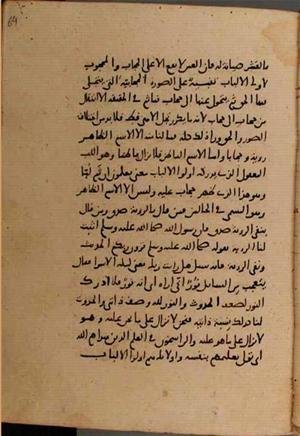
بالقشر، صيانة له؛ فإن العين لا تقع إلا على الحجاب، والمحجوب هو لأولي الألباب.

تنبيه على الصورة الحجابية التي يتجلى فيها الحق ثم يتحول عنها إلى حجاب؛ فما ثم في الحقيقة إلا انتقال من حجاب إلى حجاب؛ لأنه ما يتكرر تجل إلهي قط؛ فلا بد من اختلاف الصور، والحق وراء ذٰلك كله.

فما لنا منه إلا الاسم الظاهر رؤية وحجابا، وأما الاسم الباطن فلا يزال باطنا، وهو اللب المعقول الذي يدركه أولو الألباب، يعني يعلمون أن ثم لُبًّا، وهو هٰذا الذي ظهر حجاب عليه، وليس إلا الاسم الظاهر، وهو المسمى في الحالين.

(وجها إثبات الرؤية ونفيها)

فمن قال بالرؤية صدق ومن قال بنفي الرؤية صدق؛ فإن رسول الله ص أثبت لنا الرؤية بقوله ص: «ترون ربكم»؛ الحديث. ونفى الرؤية، فإنه ص سئل: «هل رأيت ربك؟» يعني ليلة الإسراء، فقال يتعجب من السائل: «نور، أَنَّى أراه؟»؛ أي أنه نور فلا أدرك النور لضعف الحدوث.

والنور لله وصف ذاتي، والحدوث لنا كذٰلك نسبة ذاتية؛ فنحن لا نزال على ما نحن عليه وهو لا يزال على ما هو عليه، ﴿والرَّاسِخُونَ في الْعِلْمِ﴾ [آل عمران: ٧] ﴿الَّذِينَ هَداهُمُ الله﴾؛ أي تولى تعليمهم بنفسه، ﴿وأُولئِكَ هُمْ أُولُوا الْأَلْبابِ﴾ [الزمر: ١٨]؛
İngilizce

by the shell to protect it. The eye falls only upon the veil; what is veiled belongs to the possessors of kernels.

This draws attention to the veiling form in which the Real discloses Himself, then changes from it to a veil. In reality there is only a passage from veil to veil, for no divine self-disclosure is ever repeated. The forms must therefore differ, and the Real is beyond all of this.

Thus we have of Him only the Name the Manifest, as vision and veil. As for the Name the Inward, it remains forever inward. It is the intelligible kernel apprehended by the possessors of kernels: they know that there is a kernel, and that what has appeared is a veil over it. This is none other than the Name the Manifest, and He is the Named in both cases.

(The Two Aspects of Affirming and Denying Vision)

Whoever affirms vision speaks truly, and whoever denies vision speaks truly. The Messenger of God, God’s blessings and peace be upon him, affirmed vision for us by saying, God’s blessings and peace be upon him, ‘You will see your Lord’—the report. He also denied vision: when he was asked, God’s blessings and peace be upon him, ‘Did you see your Lord?’—meaning on the night of the Night Journey—he said, astonished at the questioner, ‘Light—how could I see Him?’ That is, He is light, and I cannot apprehend light because of the weakness of temporal origination.

Light is an intrinsic attribute of God, just as temporal origination is an intrinsic relation belonging to us. We remain as we are, and He remains as He is. ‘Those firmly rooted in knowledge’ [Al ‘Imran 3:7] are ‘those whom God has guided’—that is, whose teaching He Himself has undertaken—‘and those are the possessors of kernels’ [al-Zumar 39:18].

Yazma görüntüsüYazma cildi 30 · Sayfa 128

Arapça ve İngilizce aynı Konya sayfa kimliğiyle bağlanır. Sayfa eşleştirmesi yaklaşıktır; doğrulamak için yazma görüntüsüne bakın.

Kahire kaynak referansı

Ibn al-Arabi, The Meccan Revelations — Yazma cildi 30 · Sayfa 128 — https://www.futmak.com/turkce/konya/pages.php?id=8936&text=both