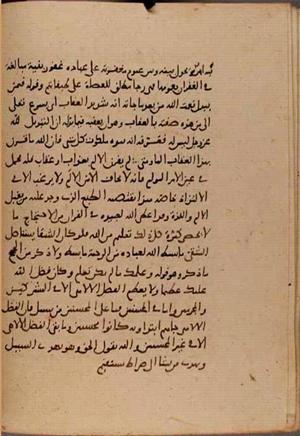
‘Praise be to God, Lord of the worlds’ [al-Fatiha 1:2]. He did not say, ‘Lord of Himself,’ because a thing is not attributed to itself.
(Universal Care and the Leader’s Responsibility)
This is a divine counsel to His servants, since He created them in His form and granted to those among them whom He granted the highest leadership, the lowest, and what lies between them. This is his saying—God’s blessings and peace be upon him—‘Every one of you is a shepherd, and every one is responsible for his flock.’
The highest shepherding is the supreme leadership; the lowest is a person’s leadership over his own bodily members. Between them is the leadership one possesses over one’s family, children, pupils, and slaves.
Every human being is created in the form. For this reason leadership extends to all human beings, and its ruling is one in all, insofar as each is a leader. The kingdom expands and contracts, as we have established.
The leader watches the states of those he rules with every breath. This is the leader who knows the worth of what God has placed under his charge and over which He has given him precedence, all so that he may know that God watches over him and is the one who appointed him vicegerent.
(The Diminishing of Subjects and the Diminishing of Mastery)
He then drew his attention to a matter, if only he would understand God’s teaching: when a master loses an entity or a state among those over whom he is master, his mastery has diminished by that amount and he has been removed from office to that extent. This resembles someone who frees his share in a slave: that portion of the slave is freed, but emancipation does not extend throughout the whole slave unless he is freed entirely.
Likewise, if a leader becomes distracted by his amusement and affairs, shares with his subjects their various pleasures and attainment of appetites, and does not examine the states of those