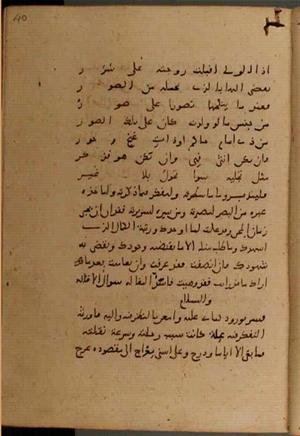
When the friend of God is approached
By his wife upon couches,
He imparts to her
The forms he bears.
When he unites with her,
They take form upon forms
Of the kind that, were she to give birth,
Would be upon those forms:
Of a ruling imam,
Or a woman of coquetry and wide eyes.
If it is female, it is she;
If it is he, then male.
Like His self-disclosure, equally:
Transformation without another.
(The Letter’s Conclusion and Its Recipient’s End)
Let my friend ponder what I have written and reflect upon what I have mentioned. Let him take it as a lesson from sight to his insight, and from his secret to his inmost self. The time of trials is approaching. You know why He brought you into existence and the rank of perfection He made you witness. He asked of you only what your existence requires and your witnessing decrees. If you are equitable, you have known. If you feign blindness after He has shown you what you have seen, you have weakened, corrupt in speech, asking to be released. Peace.
He rejoiced when my letter reached him and looked deeply into it. Reflection upon it brought him an illness that caused his departure and swift removal. He remained only a few days, then passed away, ascending upon the most radiant ascent to his intended goal
Notlar
Translator’s note TN6612-1: The supplied تصورا is provisionally read as the dual taṣawwarā, “they take form”; the verbal noun taṣawwuran is also possible. The closing poetic comparison is compressed: the forms, gendered pronouns, and transformation ‘without another’ are retained without determining every referent. The subsequent phrase concerning corrupt speech and asking to be released is also syntactically compressed.