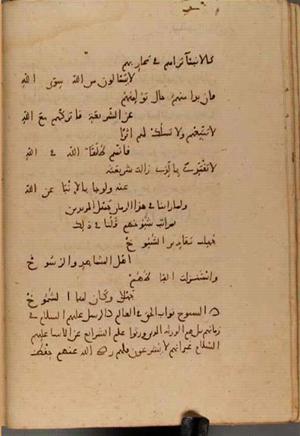
You see them like prophets in their prayer niches,
asking God for nothing but God.
If a state appears from them, bewildering them
away from revealed law, leave them with God.
Do not follow them or walk in their traces;
they are God’s freed ones in God.
Do not imitate one whose revealed law has departed
from him, even if he brings news from God.
Seeing the disciples’ ignorance in this age of their shaykhs’ ranks, we said:
The worth of shaykhs was unknown,
those of witnessing and firm rootedness.
Their utterances were brought low
through ignorance, though they possessed loftiness.
Shaykhs are the Real’s deputies in the world, like messengers, peace be upon them, in their time. Rather, they are the inheritors who inherit knowledge of revealed laws from prophets, peace be upon them, though they do not prescribe law. To them belongs preserving
Notlar
Translator’s note TN4791-1: The poem distinguishes a shaykh’s state from permission to follow him; the prose develops this distinction and explicitly denies new lawgiving. “Whose revealed law has departed from him” preserves the source’s formulation without turning it into permission for others to abandon revealed law.