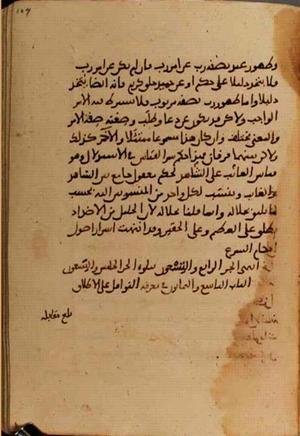
and a servant’s appearing with a lord’s attribute by a lord’s command. If it is not by a lord’s command, it is not adopted as evidence for a ruling; or if it arises from praiseworthy, noble character, it too is adopted as evidence.
A lord’s appearing with a lorded-over one’s attribute does not require an obligatory command. It may arise from supplication and request, whose form is that of command although the meaning differs. Though this is heard and obeyed, as is the other, there is a distinction between them. This is the ruling of analogy’s secret in taking evidence. It is analogizing the witnessed to the absent through a rationally understood ruling joining them, ascribed to each of those to whom it is ascribed in what befits his majesty. We say “his majesty” because jalīl is among words with opposite meanings, applied to the great and to the insignificant. The secrets of the principles of revealed legal rulings have ended. End of Part Ninety-Four, followed by Part Ninety-Five: Chapter Eighty-Nine, on
Notlar
Translator’s note TN3968-1: The supplied direction is “analogizing the witnessed to the absent,” retained rather than reversed to the more familiar formula. The final words end with “on,” leaving the announced chapter title incomplete as in the source.