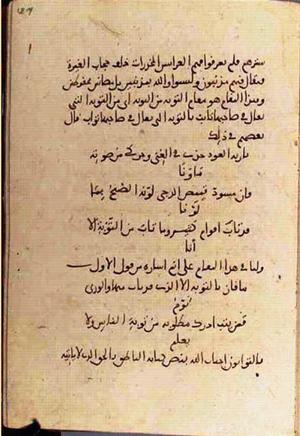
He concealed them, so they remained unknown. They are the brides secluded behind the veil of jealousy. They are called sinners, but by God they are not sinners; rather, they are protected and guarded.
This station is the station of repentance from repentance: that is, from the repentance whose possessor is called one who repents, through the repentance whose possessor is called one who returns repeatedly. Someone said concerning this:
O mistress of the lute, begin to sing,
and stir whatever in its sound has grown languid.
For the blackened shirt of darkness—
morning has colored it with its hue.
Many people have repented, yet none
has repented of repentance except me.
We have said concerning this station, with a more complete allusion than the earlier poet’s words:
None triumphs through repentance except one
who has repented of it, while mankind sleeps.
Whoever turns away attains what he seeks—
[turns away] from people’s repentance, without knowing.
Those who return repeatedly are God’s beloveds, according to the explicit text of His Book, which speaks the truth and which “falsehood cannot approach
Notlar
Translator’s note TN3402-1: The first poem’s image of morning coloring the blackened shirt of darkness is compressed; ‘with its hue’ renders the supplied bima lawwana without specifying a further color or referent.
Translator’s note TN3402-2: In the final couplet, ‘from people’s repentance’ is read as the delayed complement of ‘turns away’ in the preceding line, following the theme of repentance from repentance. The concluding ‘without knowing’ is left unexpanded, since the verse does not specify the knowledge in question. The final unvocalized verb may also be read passively, “and is not known”; the supplied text does not settle its vocalization.