
Futmak · الفتوحات المكية · Meccan Revelations

Fütûhât-ı Mekkiyye

Yazma cildi 8 · Sayfa 130

Konya yazması

Arapça kaynağı açİngilizce çeviriyi aç

Arapça

اعتبار الباطن في ذٰلك

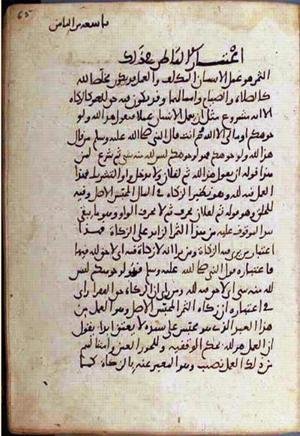
الثمر هو عمل الإنسان المكلف، والعمل قد يكون مخلصا لله كالصلاة والصيام وأمثالهما وقد يكون فيه حق للغير كالزكاة إلا أنه مشروع؛ مثل أن يعمل الإنسان عملا فيقول: هٰذا لله ولوجوهكم، أو ما لي إلا الله وأنت.

قال النبي صلى الله عليه وسلم: «من قال هٰذا لله ولوجوهكم، فهو لوجوهكم ليس لله منه شيء» ثم شرع لمن هٰذا قوله أن يقول: «هٰذا لله ثم لفلان» ولا يدخل واو التشريك.

فهٰذا العمل فيه لله وهو نظير الزكاة في المال المحبس الأصل وفيه للخلق وهو قوله: «ثم لفلان»، بحرف ثم، لا بحرف الواو وهو ما يبقى بيد الموقوف عليه من هٰذا الثمر الزائد على الزكاة فهٰذا اعتبار من يرى فيه الزكاة.

ومن يرى أنه لا زكاة فيه أي لا حق لله فيها، فاعتباره قول النبي صلى الله عليه وسلم: «فهو لوجوهكم، ليس لله منه شيء» أي لا حق فيه لله.

ومن رأى أن الزكاة حق الفقراء رأى في اعتباره أن زكاة الثمر المحبس الأصل وهو العمل من هٰذا العبد الذي هو محبس على سيده لا يعتق أبدا يقول: إن العمل هو لله بحكم الوقفية وللحور العين وأمثالهم من ذٰلك العمل نصيب وهو المعبر عنه بالزكاة كما
İngilizce

Its Inward Application

The fruit is the work of the person under obligation. Work may be devoted purely to God, like prayer, fasting, and similar acts. It may also include a right belonging to another, like almsgiving, while remaining prescribed. For example, a person performs a deed and says, “This is for God and for your sake,” or “I have only God and you.”

The Prophet, may God bless him and grant him peace, said, “If someone says, ‘This is for God and for your sake,’ it is for your sake, and God has no part in it.” He then prescribed that someone who says this should say, “This is for God, then for so-and-so,” without inserting the “and” that makes them partners.

Thus some of this work is for God, corresponding to almsgiving from property whose source is endowed. Some is for creation, expressed by “then for so-and-so,” using “then” in place of “and.” This is what remains in the beneficiary’s hands from the fruit beyond the almsgiving. This is the inward application of the view that almsgiving is due.

For those who hold that no almsgiving is due, that is, that God has no right in it, the inward application is the Prophet’s saying, may God bless him and grant him peace, “It is for your sake, and God has no part in it.” That is, God has no right in it.

Those who regard almsgiving as the right of the poor consider the fruit of an endowed source to be the work of this servant, who is held for his Master and will never be freed. The work belongs to God by the ruling of endowment. The wide-eyed maidens and others like them have a share in that work, expressed as almsgiving, as

Notlar

Translator’s note TN2342-1: The distinction is between the conjunction wa, “and,” and thumma, “then.” The author takes the first to place the named parties together and the second to preserve an order between the divine and created claims.

Yazma görüntüsüYazma cildi 8 · Sayfa 130

Arapça ve İngilizce aynı Konya sayfa kimliğiyle bağlanır. Sayfa eşleştirmesi yaklaşıktır; doğrulamak için yazma görüntüsüne bakın.

Kahire kaynak referansı

Ibn al-Arabi, The Meccan Revelations — Yazma cildi 8 · Sayfa 130 — https://www.futmak.com/turkce/konya/pages.php?id=2342&text=both