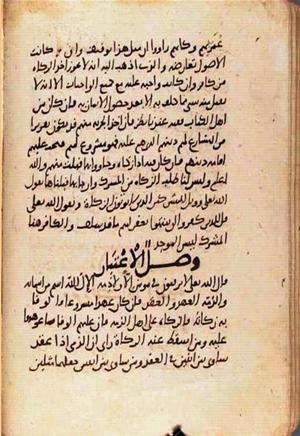
ʿUmar toward them. They seem to have considered such a matter to rest on revealed instruction, though the established principles oppose it.
I hold that almsgiving may not be taken from an unbeliever, even though it is obligatory for him along with all other obligations. Nothing he is charged with is accepted from him until he has acquired faith in it.
If he is one of the People of the Book, however, there is a question for us to consider. Taking jizyah from them may amount to the Lawgiver’s confirmation of the religion they follow, so that it is prescribed for them. They must therefore uphold their religion. If it includes paying alms and they bring them, they are accepted from them. God knows best.
We may not demand almsgiving from someone who ascribes partners to God, but if he brings it, we accept it. God, exalted is He, says, “Woe to those who ascribe partners, those who do not give alms” [Fussilat 41:6–7]. God, exalted is He, also says, “Say to those who disbelieve that if they desist, what has passed will be forgiven them” [al-Anfal 8:38]. The unbeliever here is the one who ascribes partners, as distinct from the one who affirms unity.
Continuation
The Inward Application
God, exalted is He, said, “They respect neither an ill nor a covenant in a believer” [al-Tawbah 9:10]. Ill is God, one of His names, while dhimmah is a covenant and a contract. If it is a prescribed covenant, fulfilling it is its almsgiving. Almsgiving thus applies to the people of the covenant, since they must fulfill what they covenanted to do.
Whoever exempts him from almsgiving considers that, in concluding a contract, the person under covenant places two parties on an equal footing. Whoever makes two equal makes them alike,
Notlar
Translator’s note TN2333-1: The author expressly interprets ill in Quran 9:10 as a divine name and dhimmah as a covenant. The English retains ill so that his interpretation remains visible. Protected non-Muslims are called ahl al-dhimmah in the legal discussion.