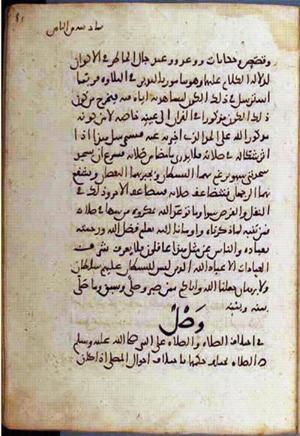
stories, accounts, promises, and threats. The mind ranges through created things because the speech points to them, and he is commanded to reflect while reciting. He may pursue a particular created thing because he witnesses it there, then move from its being mentioned in the Quran to its own entity in particular, outside its being mentioned by God in the precise terms of what He has related about it.
This counts as forgetfulness when it causes doubt in his prayer, so that he no longer knows how much of the prayer has passed. He is then prescribed two prostrations for forgetfulness, by which he humiliates Satan, repairs the deficiency, and pairs an excess. His prayer is doubled and his reward doubled. This applies equally to voluntary and obligatory prayer. God has threatened no ill for someone who is forgetful within prayer.
Whoever attends to what we have mentioned and indicated knows God’s bounty and mercy toward His servants. People are heedless of such things. Only God’s servants over whom Satan has neither authority nor proof know the nobility of acts of worship. May God make us and you, through His favor and blessing, among those who persevere and pray, who run ahead and never run second.[15]
Continuation on the Variations of Prayer
As for invoking blessings on the Prophet, may God bless him and grant him peace, the ruling of prayer differs with the states of the one praying when
Notlar
[15]
(The second occurrence of ṣallā uses the sense of the horse that runs immediately behind the winner. It is contrasted here with “run ahead.”)
Translator’s note TN2294-1: “Pairs an excess” preserves the wording concerning the two prostrations and an excess in the prayer. The author connects the added prostrations to an increase in reward.