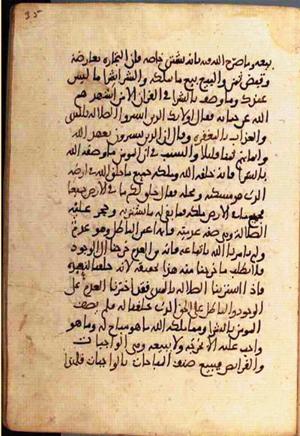
to sell. God has not expressly described him as buying alone. Trade involves an exchange and taking a price. Sale is selling what one owns, and buying is buying what one does not have.
The Quran describes buying only in the case of those whose wrongdoing God makes manifest. He said, “They are those who bought error in exchange for guidance, and punishment in exchange for forgiveness” [al-Baqarah 2:175]. He said, “Those who sell God’s covenant and their oaths for a small price” [Al ʿImran 3:77].
God did not describe the believer as buying because He created him and gave him ownership of all He created on the earth, which is his dwelling and place. He said, “He created for you all that is on the earth” [al-Baqarah 2:29]. Everything on the earth therefore belongs to him, leaving him nothing to buy.
He barred him from error, which is a quality of nonexistence, for it is falsehood itself, and falsehood is nonexistence. God has not commanded us to follow it. We emerged from nonexistence into existence, so we should not seek what we have emerged from. That is its reality. He created us to worship Him. If we buy error in exchange for guidance, we choose nonexistence over existence and falsehood over the truth for which we were created. Thus He did not describe the believer as buying.
Among what God has given him to own are things permitted to him and things he is obliged to retain and not sell, namely the obligatory duties and prescribed obligations. He sells the class of permitted things for obligations. This is why
Notlar
Translator’s note TN2282-1: The author’s distinction concerns the believer’s relation to what God has already given him. The literal word for buying in Quran 3:77 is rendered “sell” in ordinary English, since the thing received is the small price.