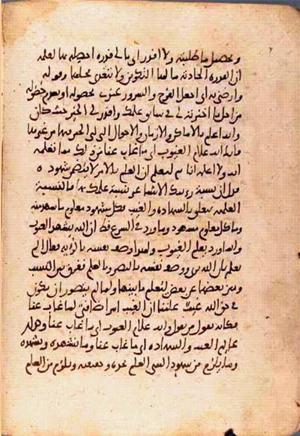
and obtain what I have sought, while I am not.” That is, I have no power with which to obtain it, since he knows that originated power does not bring things into being and does not extend beyond its own locus.
His saying “Make me content with it” means, “Give me joy and delight in its coming about or its failing to come about, because of what You have chosen for me in Your prior knowledge. Ordain good for me wherever it may be. You know better the places, times, and states in which there is good for me than those in which there is none. For You are the Knower of all unseen things,” meaning what is hidden from us of this, which You know and I do not.
(Knowledge, Witnessing, and Existence)
Know that knowledge of a thing does not entail witnessing it. This shows that your relation of seeing things differs from your relation of knowing them. Knowledge relates to both the witnessed and the unseen. Everything witnessed is known in respect of what is witnessed of it, while some things known remain unwitnessed.
The revealed Law has never said that God witnesses unseen things. It says that He knows unseen things. This is why He described Himself by seeing, saying, “Does he not know that God sees?” [al-ʿAlaq 96:14]. He described Himself by sight and knowledge, distinguishing the relations from one another so that what lies between them may be known.
Since there can be nothing unseen in relation to God, we know that the unseen is a relative matter, referring to what is hidden from us. Thus the one saying “You are the Knower of all unseen things” means what is hidden from us. Likewise, “Knower of the unseen and the witnessed” [al-Anʿam 6:73] means what is hidden from us and what we witness and He witnesses.
Witnessing a thing does not entail knowledge of its definition and reality. Knowledge