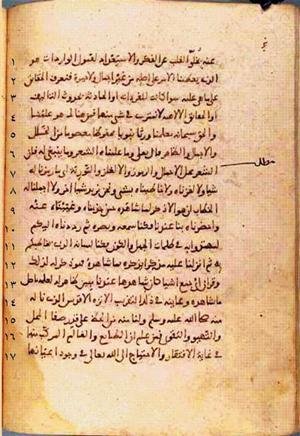
by emptying the heart of thought and preparing to receive incoming gifts, is the One who gives us the matter in its original reality, in detail, without compression or bewilderment. We thus know realities as they are, whether simple realities, composite realities arising with composition, or divine realities; we have no doubt about any of them.
From there comes our knowledge, and the Real, glory be to Him, is our teacher, through a prophetic inheritance safeguarded and protected from defect, compression, and the outward. God says: “We have not taught him poetry, nor is it fitting for him” [Qur’an 36:69]. For poetry is the domain of compression, symbols, riddles, and double meaning.
The meaning of this verse is therefore: We did not symbolize anything for him, make it a riddle, address him with one thing while intending another, or compress the address for him. Rather, as God says in the remainder of the verse, “It is only a reminder and a clear Qur’an” [Qur’an 36:69] of what he witnessed when We drew him, made him absent from himself, and brought him through Us into Our Presence. We were his hearing and his sight, as stated in the hadith.[245]
Then We returned him to you, so that you might be guided by him through the darkness of ignorance and created existence—that is, the darkness of nature. We were his tongue with which he addresses you. Then We sent down to him one who reminds him of what he witnessed—Gabriel, peace be upon him. It is thus a “reminder” for him of that; and a “Qur’an,” that is, a gathering[246] of things he witnessed in Our Presence; and “clear,” that is, manifest to him because he knows the origin of what he witnessed and beheld in that most transcendent and holy drawing-near that God’s Messenger—may God bless him and grant him peace—attained from Him.
We have a share in this drawing-near, unveiling, and witnessing in proportion to the receptacle’s purity, readiness, and mindfulness, according to His sayings: “Be mindful of God, and God teaches you” [Qur’an 2:282], and “If you are mindful of God, He will grant you a criterion of discernment” [Qur’an 8:29]—that is, something through which you distinguish the true from the false.
Whoever knows that the natures and the cosmos composed from them stand in utmost poverty and need of God for the existence of their entities—
Notlar
[245]
This is the well-known divine hadith in Sahih al-Bukhari (no. 6137), related by Abu Hurayrah, who said that God’s Messenger—may God bless him and grant him peace—said: God said, “Whoever shows enmity toward a friend of Mine, I declare war upon him. My servant draws near to Me with nothing more beloved to Me than what I have made obligatory upon him. My servant continues drawing near to Me through supererogatory acts until I love him. When I love him, I am his hearing with which he hears, his sight with which he sees, his hand with which he grasps, and his foot with which he walks. If he asks Me, I shall surely give to him; if he seeks refuge in Me, I shall surely protect him. I hesitate over nothing that I do as I hesitate over taking the believer’s soul: he dislikes death, and I dislike distressing him.”
[246]
For more on the meanings of the word “Qur’an,” see Suluk al-Qalb (p. ??? [reference unfinished]).
Translator’s note TN203-1: The exposition shifts into an interpretive divine first-person voice after the quoted verse. Only the explicitly identified Qur’anic quotations are presented as scripture; the intervening first-person explanation remains the author’s exposition. “The outward” translates the supplied al-zahir in the phrase about protection; its exact force there is compressed and has not been replaced by a conjectured reading.