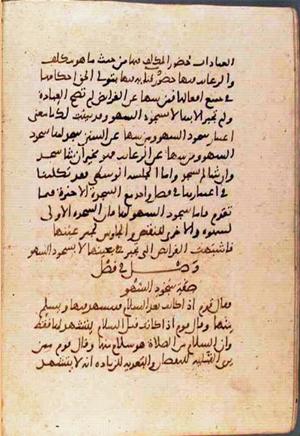
of worship are the presence in them of the person under obligation insofar as he is under obligation. The recommended practices are his presence in them as the Real takes charge of the rulings governing all their acts.
If a person forgets the obligatory acts, the worship is invalid. It is made good only by performing them. The prostration for forgetfulness cannot make them good. I have explained to you the meaning of the inward application of the prostration for forgetfulness.
If he forgets the Sunna practices, he performs the prostration for forgetfulness for them. If he forgets recommended practices, he is free to choose. He may prostrate if he wishes and refrain if he wishes.
We have already spoken about the inward application of the middle sitting in one section together with the final prostration. As for prostration for forgetfulness on its account, the first prostration is for the forgetfulness, and the other for the omission. The sitting makes good the omission of the sitting itself. It thus resembles obligatory acts, which are made good by the acts themselves, independently of prostration for forgetfulness.
Continuation in the Section on the Form of the Prostration for Forgetfulness
Some say that if the prostration comes after the salutation, one recites the testimony while performing it and concludes it with a salutation. Some say that if it comes before the salutation, one recites only the testimony for it and the salutation of the prayer serves as its salutation. Some who hold that it comes before the salutation for an omission and after the salutation for an addition say that one does not recite the testimony
Notlar
Translator’s note TN2019-1: The supplied text says “the final prostration” (al-sajda al-akhīra). The earlier discussion paired the middle sitting with the final sitting. The wording here has been retained.