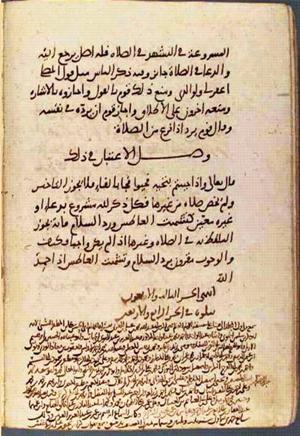
prescribed in the testimony in prayer, so it has a precedent to which it can be referred. Supplication is permissible in prayer and includes mention of people, as when the worshipper says, “Forgive me and my parents[41].” Some prohibited returning the greeting in words and allowed it by a gesture. Others prohibited it without qualification. Some allowed a person to return it inwardly, and some said he should return it after completing the prayer.
Continuation on the Inward Application
He, exalted is He, says, “When you are greeted with a greeting, then greet in return” [al-Nisaʾ 4:86]. He used the particle fa, so delay is impermissible. He made no distinction for prayer. Every prescribed remembrance of God, whether in supplication or in another specified form, such as blessing someone who sneezes or returning a greeting of peace, may be uttered in prayer or outside it even if it is not obligatory. How much more so when returning the greeting and blessing someone who sneezes when he praises God are both obligatory?
End of Part Forty-Three. Part Forty-Four follows.
Notlar
[41]
(The supplication has been corrected to “Forgive me and my parents” by comparison with the newer edition.)
Translator’s note TN1985-1: The particle fa, rendered “then,” connects the return greeting directly to the greeting received. The author takes that connection to require an immediate reply, even during prayer.