
Futmak · الفتوحات المكية · Meccan Revelations

Fütûhât-ı Mekkiyye

Yazma cildi 6 · Sayfa 16

Konya yazması

Arapça kaynağı açİngilizce çeviriyi aç

Arapça

وقت تذكر الناسي واستيقاظ النائم، فإن وقته عند ما يتذكران كان ناسيا، أو يستيقظ إن كان نائما.

والوقت المعين على قسمين: قسم مُخْلَص، وقسم مشترك[5]، فالمُخْلَص وسط الوقت الموسع في الصلوات كلها، وآخر وقت الصبح، وأول وقت الظهر، فإنه لا يقع فيما ذكرناه اشتراك لصلاة أخرى، كما يقع في أواخر الصلوات الأربع.

والمشترك هو الوقت الذي بين الصلاتين، كالظهر والعصر وغيرهما، بالخلاف المذكور المعلوم في ذٰلك عند علمائنا من علماء الشريعة، نذكر ذٰلك في موضعه، إن شاء الله عند كلامنا في أوقات الصلوات كلها، صلاة صلاة على التفصيل.

اعتباره

قلنا المصلي هو الثاني من السابق في الحلبة، وإن الصلاة ثانية في الرتبة من شهادة التوحيد وقد قال الحق سبحانه: «قسمت الصلاة بيني وبين عبدي نصفين»، فجعله في حال الصلاة ثانيا له في القسمة الإلهية، فقال في الصلاة مطلقا، وما قيد فرضا من تطوع، وقد قلنا: إن الوقت منه معين؛ وهو في الاعتبار الفرض، وغير معين؛ وهو في الاعتبار التطوع.

(دوام الحضور والتمييز بين وجوهه)

فالعارف الذي هو على صلاته دائم، وفي مناجاته بين يدي ربه قائم

Notlar

[5]

(المُخْلَص من الوقت هو المختص بصلاة واحدة، والمشترك ما يقع فيه الاشتراك بين صلاتين على التفصيل الفقهي الذي يذكره المؤلف.)
İngilizce

time is when one who forgot remembers, or one who was asleep wakes up. That is the appointed time for each of them, upon remembering if one forgot or upon waking if one was asleep.

A specified time is of two kinds, exclusive and shared[5]. The exclusive time is the middle of the extended interval for each prayer, the end of the time for dawn prayer, and the beginning of the time for noon prayer. In the intervals just mentioned, no other prayer shares the time, as happens at the ends of the other four prayers.

The shared time is the time between two prayers, such as noon and afternoon prayer and the other pairs. Our scholars of the revealed Law are known to disagree about this, as we have mentioned. God willing, we shall address their disagreement in its proper place when we discuss the times of all the prayers individually and in detail.

Its Inward Application

We have said that the one who prays follows the front-runner in the race, and that prayer is second in rank to the testimony of divine oneness. The Real, glory be to Him, has said, “I have divided the prayer into two halves between Me and My servant.” Thus in prayer He makes the servant second to Himself in the divine division. He speaks of prayer without qualification, making no distinction between obligatory and supererogatory prayer. We have said that time can be specified, which inwardly corresponds to the obligatory, or unspecified, which inwardly corresponds to the supererogatory.

(Continuity of Presence and Distinguishing Its Aspects)

The knower who remains constant in his prayer and stands before his Lord in intimate converse

Notlar

[5]

(The exclusive time belongs to a single prayer. In the shared time two prayers overlap, according to the legal distinctions the author sets out.)

Translator’s note TN1588-1: Muṣallī means “one who prays” and can also designate the horse that follows the leader in a race. The latter sense illustrates prayer’s place after the testimony of divine oneness and the servant’s place in the reported division of prayer.

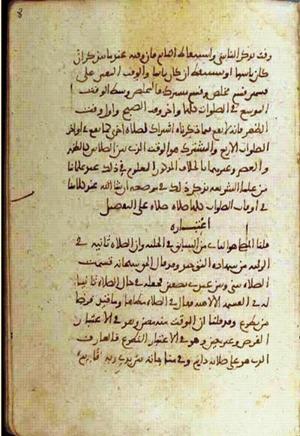
Yazma görüntüsüYazma cildi 6 · Sayfa 16

Arapça ve İngilizce aynı Konya sayfa kimliğiyle bağlanır. Sayfa eşleştirmesi yaklaşıktır; doğrulamak için yazma görüntüsüne bakın.

Kahire kaynak referansı

Ibn al-Arabi, The Meccan Revelations — Yazma cildi 6 · Sayfa 16 — https://www.futmak.com/turkce/konya/pages.php?id=1588&text=both