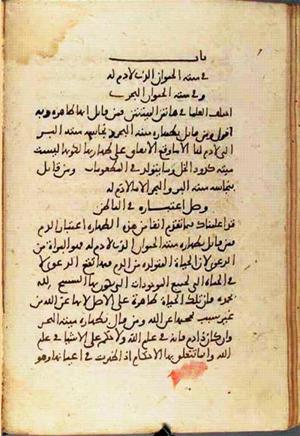
Chapter on the Carcass of an Animal Without Blood and on the Carcass of a Sea Animal
The scholars differed about these two kinds of carcass. Some held both to be pure, and I take this view. Some held a sea carcass to be pure and a land carcass without blood to be impure, except in cases agreed to be pure because they do not count as carrion, such as vinegar worms and what is generated in foods. Others held land and sea carcasses to be impure except in the case of animals without blood.
Continuation. Its Inward Application
Earlier, in the discussion of this purification, we explained the inward application concerning blood. The position that the carcass of an animal without blood[40] is pure corresponds to being free of the claim. A claim arises in the life generated from blood, while the life common to all existing things, through which they glorify God with His praise, is free of it. That life is originally pure, for it comes from God without any intermediary cause to veil it from God.
As for those who hold a sea carcass pure even if the animal has blood, it is in God’s knowledge, and there is no ruling over things in God’s knowledge. Rulings only attach to them when they appear as entities, and this is
Notlar
[40]
(The text was corrected to lā dama lahu, “without blood,” through comparison with the newer edition, making it consistent with the chapter heading.)